
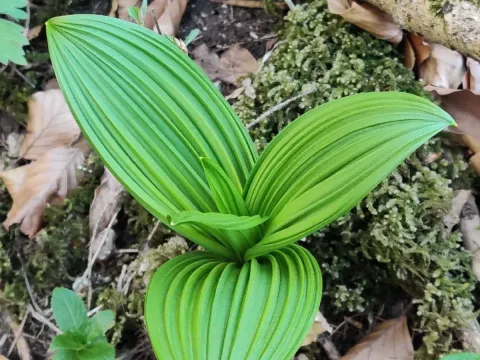
Black false hellebore
Veratrum nigrum
Black false hellebore belongs to the Melanthiaceae family and is a long-lived herbaceous perennial. Cultivation is primarily managed through seeds or the division of rhizomes.
What the section contains
Black false hellebore
Sowing seeds outdoors in late autumn is recommended, as natural stratification during the winter period is essential for successful germination in spring.
For spring sowing, seeds require artificial stratification by storing them in a moist medium at approximately 4 degrees Celsius for at least three months.
Seeds should be planted at a shallow depth of about 1 to 2 centimeters, ensuring the soil remains moist to support the slow germination process.
Seedlings develop slowly during the first year, making it crucial to keep the cultivation area free from aggressive weeds that could stunt their growth.
The plant thrives in moist, fertile, loamy soils, preferring environments with a neutral or slightly acidic pH for optimal development.
Although it can tolerate full sun in cool climates, the plant prefers semi-shaded areas, especially in regions with intense summer heat.
Proper soil drainage is a critical requirement; water stagnation is detrimental to the rhizomes and can lead to severe rot issues.
Veratrum nigrum is highly winter-hardy and requires no special protection, even in regions with harsh winters and deep frost cycles.
Consistent soil moisture is necessary during the active growing season, particularly during the hot summer months to maintain foliage health.
The primary economic focus for this crop is the harvesting of rhizomes and roots, typically collected from plants that are three to five years old.
Maximum yield is achieved in soils enriched with organic compost, which provides the necessary nutrients for the development of robust root systems.
With correct agricultural management, the yield of dried medicinal material per square meter can meet the requirements for pharmaceutical standards.
To ensure the long-term sustainability of the plantation, a selective harvest method should be practiced to allow for natural regeneration.
The quality of the final product is highly dependent on drying conditions, with the ideal temperature ranging between 40 and 50 degrees Celsius.
Black false hellebore contains alkaloids that serve as a natural defense mechanism, making the plant relatively resistant to most garden pests.
In conditions of high humidity and poor air circulation, the plants may become susceptible to fungal leaf spots that require prompt care.
Young sprouts may occasionally suffer damage from slugs or snails, which can be managed using simple physical barriers or careful monitoring.
Root rot remains the most significant threat to the crop, usually caused by poor soil drainage or excessive irrigation practices.
Since the entire plant is considered toxic, it is imperative to use protective gloves and masks when handling or processing the plant material.
Harvesting is performed in late autumn, once the above-ground parts have died back, as this is when active compounds concentrate in the roots.
Rhizomes are carefully excavated to ensure the root system is kept intact, minimizing damage to the sensitive growth buds for the following season.
Once harvested, the roots are immediately cleaned of soil, washed with water, and separated from any remaining aerial stems or small debris.
Large rhizomes are cut into smaller sections to facilitate faster drying, which is essential for preserving the chemical integrity of the material.
Dried roots are then sorted and stored in cool, dry, and well-ventilated areas until they are ready for pharmaceutical processing.