
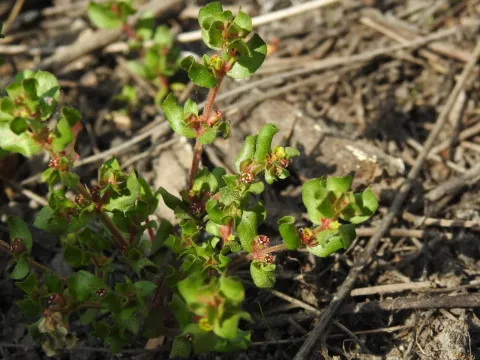
Lythrum borysthenicum
Lythrum borysthenicum
Lythrum borysthenicum, commonly known in its scientific context as a member of the Lythraceae family, is an herbaceous annual plant characterized by specific ecological adaptations.
What the section contains
Lythrum borysthenicum
The plant originates from the riverine landscapes of Eastern Europe, with the name borysthenicum referencing the historic name of the Dnieper River, highlighting its natural distribution in floodplains.
The core requirement for this plant is a consistent supply of moisture, making it a typical hygrophyte. It thrives in silt-rich soils found along the banks of rivers and in seasonally flooded grasslands.
Abundant sunlight is essential for its healthy development, as the species lacks the physiological adaptations to compete in heavily shaded environments or dense overgrown shrubbery.
The soil structure must facilitate high water retention while providing the necessary mineral nutrients found in alluvial deposits, which supports the rapid growth cycle of this annual plant.
The primary threat to Lythrum borysthenicum is habitat loss caused by large-scale landscape modification, including river regulation, damming, and the drainage of wetlands for agricultural development.
Invasive plant species present a significant challenge by outcompeting native vegetation for space and resources, which frequently results in the local extinction of this sensitive species.
Water quality degradation due to agricultural runoff can alter the chemical composition of its native habitat, negatively impacting the germination and growth rates of the plant.
Fungal pathogens represent a latent threat, particularly under conditions of stagnant water and poor air circulation, which can lead to rot and weakened structural integrity of the stems.
While insect herbivores, such as various beetles from the Chrysomelidae family, may feed on the foliage, they are generally part of the ecosystem balance rather than a primary threat to the population.