
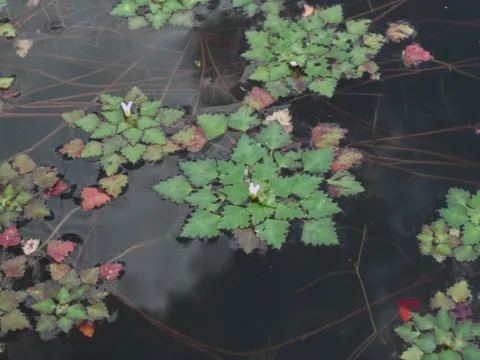
Maximowicz's water caltrop
Trapa incisa
Maximowicz's water caltrop is an annual aquatic plant belonging to the Lythraceae family. Propagation primarily occurs through seeds that mature in drupe-like fruits and settle on the bottom of the water body at the end of the season.
What the section contains
Maximowicz's water caltrop
For artificial cultivation, seeds are sown into the bottom soil of water bodies in the spring, once the water temperature reaches 15-18 degrees Celsius. Maintaining a stable water level is crucial for ensuring the seeds take root properly within the silt.
The ideal depth for sowing ranges from 30 to 80 centimeters. This depth allows the plant to form a rosette of floating leaves, which is the primary structure for photosynthesis and subsequent nutrient storage in the fruits.
Planting should be conducted in shallow, warmed ponds or dedicated aquatic agricultural basins. It is important to avoid areas with strong currents, as young seedlings are delicate and can be easily displaced or damaged.
Planting density should be managed to prevent overcrowding. It is recommended to maintain a distance of 50-70 centimeters between sowing spots to allow each plant sufficient space for leaf rosette development and fruit production.
This crop requires stagnant or slow-moving water bodies with silty or sandy-silty bottoms. The plants thrive in well-lit areas, as excessive shading can significantly hamper the development of the leaf rosettes and reduce total yields.
The optimal water temperature for active growth ranges between 20 and 25 degrees Celsius. In cooler water, the vegetative growth slows down significantly, which delays the onset of fruit maturation and limits the final harvest.
Water quality should be close to neutral in terms of pH. Maximowicz's water caltrop is sensitive to the chemical composition of its habitat and does not tolerate high levels of pollution from industrial or agricultural runoff.
Adequate levels of dissolved carbon dioxide and oxygen are essential for the plant's metabolic processes. Excessive siltation or the accumulation of organic debris can interfere with gas exchange, negatively affecting plant vigor.
Good agricultural practice requires the regular removal of competing aquatic vegetation. Invasive plants like reeds or cattails can rapidly occupy space, reducing the light and nutrient availability necessary for the water caltrop to thrive.
The main commercial product is the mature fruit, which contains a starchy kernel. Yield depends on favorable summer temperatures and the length of the warm season, as the plant requires sufficient time to complete its life cycle.
Yields can be substantial per square meter of water surface when optimal conditions are met. Harvesting is typically done manually or using specialized tools as the fruits mature and settle toward the end of the summer.
The productivity of the crop is directly linked to the quality of the bottom substrate. Nutrient-rich organic soils promote the formation of larger rosettes, each capable of producing several high-quality fruits suitable for consumption.
Post-harvest handling is critical. Fruits must be dried or processed promptly after collection to prevent spoilage, as they retain high moisture content and are susceptible to fungal growth if stored improperly.
The fruits have culinary uses, including as a source of starch or as a nutritious snack. This crop presents a promising opportunity for diversifying aquaculture and adding unique value to local agricultural markets.
Fungal pathogens represent the primary threat, especially in conditions of stagnant water and high air humidity. These infections can cause the premature death of the floating leaves and stunt the development of the plant.
Insect pests, such as larvae of certain aquatic beetles, can damage the succulent leaf stems. This physiological stress weakens the plant and decreases its ability to produce viable seeds for the next season.
Drastic fluctuations in water levels, caused by technical issues or climate anomalies, pose a major risk. Low levels can lead to desiccation, while rapid increases can prevent the plant from reaching the surface for light.
Water pollution, specifically from heavy metals or nitrogen-heavy fertilizers, is a significant threat. These substances can accumulate in the plant tissues, rendering the fruits unfit for human consumption.
Competition from invasive aquatic weed species remains a constant challenge. Regular monitoring of the plantation is required to ensure that the water caltrop remains the dominant species within its designated area.
Harvesting begins in late summer or early autumn when the fruits develop a dark color and a hardened shell. This transition indicates that the internal starch content is sufficient for maturity.
The harvest technique involves retrieving the fruits from the bottom of the pond. Collectors must be careful to avoid the sharp, horn-like projections on the fruits, which can easily puncture the skin and cause injury.
The collected material should be sorted immediately by size and maturity. Only fully mature, firm fruits should be kept for storage, as immature or damaged specimens will rot quickly and ruin the rest of the batch.
Cleaning involves washing the fruits to remove silt and organic detritus. This process is essential for preparing the crop for culinary use and ensuring it meets visual and safety standards for the market.
Storage requires a cool, well-ventilated space to prevent moisture buildup. When kept under proper conditions, the fruits can maintain their nutritional value for several months after the harvest season has concluded.