
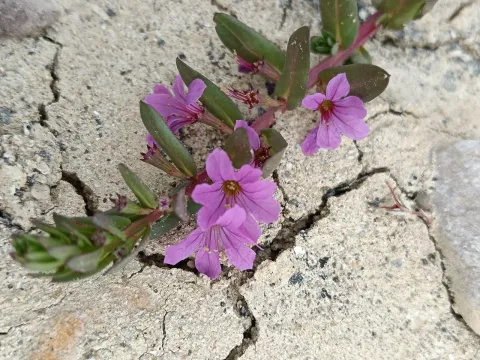
Mediterranean loosestrife
Lythrum junceum
Mediterranean loosestrife (Lythrum junceum) is a perennial herbaceous plant belonging to the Lythraceae family. In its natural habitat, it propagates mainly through seeds and occasionally through vegetative rhizome expansion.
What the section contains
Mediterranean loosestrife
In cultivation, seeds are sown in the spring once the soil temperature reaches 12–15 degrees Celsius. Maintaining consistent soil moisture is crucial during the germination phase, as the seeds are highly sensitive to desiccation.
Seeds should be sown on the soil surface because they require light for successful germination. Embedding them too deeply will inhibit sprouting; therefore, a light dusting of substrate is sufficient, with plant spacing set at 30–40 cm.
Vegetative propagation via root division is highly effective and should be carried out in early spring or late autumn. This method ensures that the plant establishes quickly and retains the genetic traits of the parent stock.
The plant exhibits vigorous growth, making it important to manage plant density effectively. Proper spacing ensures adequate air circulation, which is essential to prevent fungal outbreaks during the peak growing season.
Mediterranean loosestrife is a hygrophyte, thriving in environments with high water availability. It is naturally found along riverbanks, in damp meadows, and in low-lying, marshy areas, reflecting its ecological preferences.
This species is highly photophilous and requires full sun exposure to flourish. Shade will result in weak, leggy stems and poor flowering, which diminishes the ornamental and medicinal value of the crop.
While adaptable, the plant performs best in fertile clay or loamy soils that possess excellent moisture-retention capabilities. It is well-suited to heavy soils that might be challenging for other less specialized crops.
The plant tolerates fluctuations in water tables, provided the soil does not dry out completely. It prefers a neutral to slightly acidic soil pH, which mimics its natural wetland-edge habitat.
Adapted to temperate and Mediterranean climates, this species shows good winter hardiness. In regions with severe frosts and no snow cover, light mulching is recommended to protect the root system from freezing damage.
The economic value of Mediterranean loosestrife is primarily linked to ornamental gardening, apiculture, and its role in environmental management. It serves as an excellent nectar source for bees and various pollinators.
In herbal medicine, the aerial parts of the plant are harvested for their rich content of tannins, glycosides, and organic acids. Harvesting is typically executed during the peak of the flowering period to ensure maximum concentration of active ingredients.
Yield depends heavily on site management, particularly water supply and fertilization levels. Under optimized conditions, the crop can support two full harvests per season, maximizing the biomass output.
Beyond its traditional use, Mediterranean loosestrife is increasingly utilized in phytoremediation projects. It acts as an effective natural filter in bio-ponds, helping to strip excess nitrates and phosphates from runoff water.
As a landscape plant, its long blooming season makes it highly attractive for water feature design. Furthermore, its dense root system is excellent for soil stabilization along pond banks and riparian buffers.
The primary pests affecting Mediterranean loosestrife are leaf-feeding beetles, which can cause significant defoliation during the growing season. Early detection and monitoring are essential for effective management.
In conditions of high humidity combined with poor airflow, the plant is susceptible to powdery mildew. This fungal disease manifests as a white, dusty layer on leaves and requires targeted fungicidal intervention if it spreads.
Root rot is a common issue when drainage is poor or when excessive organic matter is added to waterlogged soil. Maintaining proper hydrological conditions and avoiding over-fertilization are key preventive strategies.
Aphids can also congregate on tender, young stems during the early summer, draining vital sap. Biopesticides are generally preferred for control to avoid harming the beneficial insects attracted to the plant's nectar.
Overall, maintaining plant health involves regular monitoring for pests, keeping the area clear of invasive weeds, and ensuring that the planting density allows for adequate evaporation from the leaf surface.
Harvesting for herbal use should be conducted exclusively on dry, sunny days. Moisture on the leaves at the time of harvest can lead to rapid degradation and mold growth during the drying process.
The upper 30–40 cm of the stems are cut, including the flower spikes. Using sharp, clean shears is mandatory to prevent crushing the stems, which helps the plant regenerate faster for subsequent harvests.
Once gathered, the biomass should be immediately cleaned of debris. It is vital to move the harvest to a drying facility quickly to prevent quality loss caused by exposure to direct sunlight or ambient heat.
Drying must take place in a shaded, well-ventilated area with temperatures not exceeding 45 degrees Celsius. Controlled drying is essential to preserve the plant's delicate aromatic and therapeutic profile.
Proper storage is the final step; dried material should be kept in breathable fabric or paper bags within a dark, cool, and dry environment to ensure it maintains its efficacy for up to two years.