
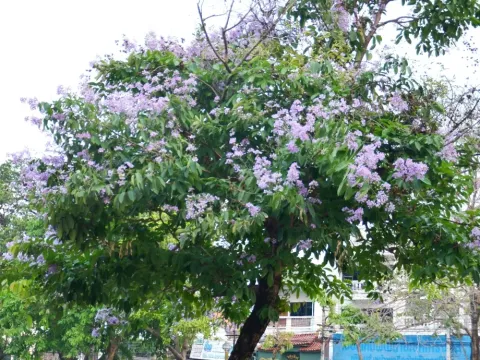
Lagerstroemia macrocarpa
Lagerstroemia macrocarpa
Lagerstroemia macrocarpa is a notable woody species belonging to the Lythraceae family. Native to the tropical regions of Southeast Asia, it is recognized for its significant ornamental value and its capacity to thrive in diverse subtropical environments.
What the section contains
Lagerstroemia macrocarpa
Botanically, this tree is distinguished by its peeling bark, leathery foliage, and impressive inflorescences. It generally grows as a mid-sized to large tree, making it an excellent candidate for urban landscape architecture and garden design in suitable temperate zones.
Climate requirements for this species include high exposure to sunlight and warm temperatures throughout the growing season. While it exhibits some tolerance to short dry spells, supplemental irrigation is necessary during the early stages of development to ensure robust growth.
Soil conditions should favor well-drained, nutrient-rich substrates with a slightly acidic to neutral pH level. Drainage is a critical factor, as root rot can occur if the substrate remains waterlogged for extended periods, necessitating careful site selection.
Beyond its ornamental utility, the timber of Lagerstroemia macrocarpa is valued for its durability and resistance to decay, which has historically made it a subject of local economic interest in its native range of Myanmar and surrounding countries.
The primary pathological threats to this species include fungal infections such as powdery mildew, which thrive in conditions of high humidity and poor air circulation within the canopy. Managing foliage health requires consistent pruning to allow for better ventilation.
In terms of insect pests, aphids and scale insects are the most common adversaries, potentially weakening the plant by sap-sucking. Integrated pest management strategies, focusing on early detection and biological control methods, are highly recommended for nursery and garden settings.