
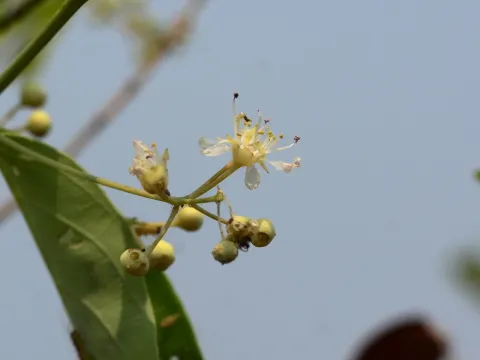
Lagerstroemia parviflora
Lagerstroemia parviflora
Lagerstroemia parviflora is a deciduous tree belonging to the Lythraceae family. Known in some regions as the small-flowered crape myrtle, it grows into a tall tree characterized by its smooth, exfoliating grey bark and simple, elliptical leaves that provide a distinct appearance.
What the section contains
Lagerstroemia parviflora
The species is native to tropical and subtropical regions of Southeast Asia, particularly India and Myanmar. It is a heliophilous species, meaning it requires abundant sunlight for vigorous growth and development, making it unsuitable for densely shaded areas.
Regarding soil requirements, it thrives in deep, well-drained loamy soils. While it exhibits a remarkable tolerance for dry conditions once established, adequate moisture during the early seedling stage is essential to ensure a high survival rate in plantation settings.
The climate must be warm to support the metabolic processes of this species, as it is highly sensitive to severe frost. When establishing a plantation, selecting sites with consistent thermal conditions is crucial for long-term productivity and health.
Propagation is generally performed through seeds or cuttings. Maintaining proper spacing during the planting phase is vital, as it ensures adequate airflow and light penetration, which are necessary to prevent the development of common foliage diseases.
The primary economic output of Lagerstroemia parviflora is its high-quality timber. The wood is renowned for being hard, durable, and resistant to environmental stressors, making it a preferred material for construction, furniture making, and agricultural tool production.
Beyond timber, various parts of the tree, including the leaves and bark, have been historically utilized in traditional medicine. Extracts from the plant are known for their therapeutic properties, adding value to the crop beyond simple wood production.
Yields are primarily defined by the volume and quality of timber produced over the rotation period. Through selective silvicultural practices, such as pruning and thinning, growers can maximize the yield of straight, high-grade logs needed for the timber market.
The species also plays a significant role in ecological management. Its ability to thrive on slopes and degraded soils helps stabilize terrain, contributing to erosion control and the overall health of the local landscape in agricultural watersheds.
Productivity is maximized when trees are managed with a clear focus on trunk development. With proper attention, the tree provides a reliable and renewable source of biomass, serving as a pillar for sustainable forestry in its native range.
The most significant threats to Lagerstroemia parviflora include fungal infections, which often manifest in conditions of high humidity and poor air circulation. Powdery mildew can affect the leaf surface, reducing the plant's overall vigor.
Insect pests represent another category of threats, with various wood-boring insects and leaf-feeders potentially causing damage. Early detection through regular field inspections is the most effective way to prevent large-scale outbreaks within a plantation.
Weed competition is particularly critical during the first three years of the tree's life. Weeds can outcompete the young seedlings for essential nutrients and water, leading to stunted growth or increased vulnerability to secondary pests and diseases.
Sanitary management is essential for maintaining a healthy grove. Removing infected or dead branches prevents the spread of pathogens and ensures that the tree's energy is directed toward healthy growth and the production of quality wood.
Overall, while the species is relatively robust, success depends on proactive management. Integrated pest management (IPM) strategies, which prioritize prevention, are recommended to maintain the productivity and longevity of these agricultural tree stands.