
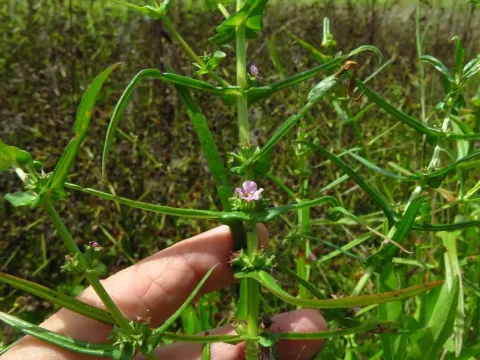
Ammannia robusta
Ammannia robusta
Ammannia robusta, commonly known as the grand red stem or simply by its scientific name, is an annual herbaceous plant belonging to the Lythraceae family. It is typically found in wetlands, swampy areas, and often infests rice paddies where consistent moisture is maintained throughout the growing season.
What the section contains
Ammannia robusta
This species is highly heliophilous, requiring full sun exposure to thrive and reach its maximum potential biomass. In agricultural environments, high light intensity is crucial, as shading from taller crops or trees can significantly inhibit its growth rate and reproduction capabilities.
The plant demonstrates a strong preference for damp, silty, or clay-based soils that are rich in nutrients. Because it is highly adapted to hydrophyte life, it can withstand prolonged periods of submergence, which makes it particularly resilient in aquatic or semi-aquatic farming systems.
Morphologically, Ammannia robusta features erect stems, often reaching heights of up to 60 centimeters. Its leaves are linear or lanceolate and arranged in an opposite pattern. The plant flowers produce small, pink to purple blooms that are characteristic of its genus within the Lythraceae family.
Reproduction is highly efficient via seeds. A single plant can produce thousands of seeds that remain viable in both wet and dry conditions. The dispersal of these seeds via water channels is the primary reason for the plant's spread across large agricultural zones.
The primary agricultural threat posed by Ammannia robusta is its aggressive competition with paddy rice. The plant competes fiercely for nitrogen and other essential mineral resources, leading to decreased yields and increased input costs for growers who must manage its population.
Interference with mechanical harvesting is a major issue in rice cultivation. Dense populations of the weed can clog machinery, slow down the harvesting process, and increase the wear and tear on specialized agricultural equipment used in wetland conditions.
Control strategies generally involve the use of selective herbicides, which must be carefully applied to avoid damaging the aquatic ecosystem or the crop itself. Integrated management involving water level manipulation is also considered a standard practice to suppress the weed.
Disease pressure in Ammannia robusta is mostly linked to fungal pathogens that thrive in stagnant water. Common issues include stem rot and leaf blight, which can be exacerbated by poor ventilation in high-density patches where the plant crowds out other vegetation.
While specific insect pests are not major killers of the plant, generalist chewing insects often feed on the foliage. Monitoring is necessary, as the plant can potentially host pests that might transition to other crops within the same farming ecosystem, although it is not considered a primary pest reservoir.