
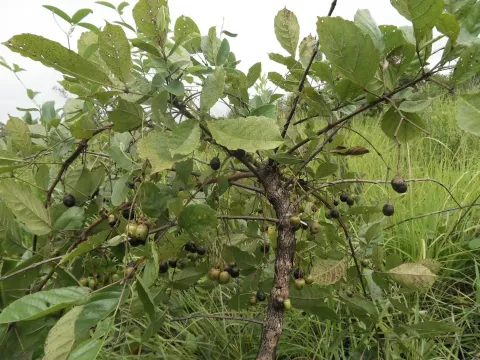
Vitex madiensis
Vitex madiensis
Vitex madiensis is a deciduous shrub or small tree belonging to the Lamiaceae family. Native to tropical Africa, this species thrives in savanna environments, often found in wooded grasslands where it has adapted to fluctuating climatic conditions.
What the section contains
Vitex madiensis
The plant demonstrates significant tolerance to seasonal drought, a trait common among flora native to its range. It requires a stable tropical climate with significant heat, as frost and cold stress are detrimental to its growth and overall physiological health.
Soil requirements for Vitex madiensis are centered around drainage and soil texture. It performs optimally in well-drained, sandy-loam soils that prevent waterlogging, which is critical during periods of heavy seasonal rainfall to avoid root rot issues.
Regarding agrotechnical practices, site selection is the primary success factor. Cultivators should ensure that the planting site provides full sun exposure, as the species is heliophilic and requires high light intensity to support vegetative growth and fruit production.
Maintenance involves periodic pruning, which helps in managing the shrub's architecture and promoting a more vigorous branching habit. This practice is essential to maximize the yield of fruit-bearing branches in managed stands.
The economic value of Vitex madiensis lies in its fruit and leaf production, which are highly regarded for their pharmacological properties in traditional medical systems. The fruits serve as a valuable raw material for local economic activities.
Harvesting is typically conducted manually once the fruits reach full maturity, often characterized by a distinct change in pigmentation. Due to the decentralized nature of the fruit ripening, repeated harvesting passes may be necessary.
Post-harvest handling is critical, requiring immediate cleaning and air-drying in shaded, well-ventilated areas. Controlled drying processes are essential to prevent mold growth and to retain the integrity of the plant's volatile aromatic compounds.
Proper storage involves keeping the processed material in airtight containers away from humidity and direct sunlight. This helps in maintaining the chemical stability of the active components over longer periods before distribution.
The sustainable harvesting of Vitex madiensis represents an opportunity for low-impact agriculture in tropical regions, contributing to both biodiversity preservation and the development of niche botanical industries.