
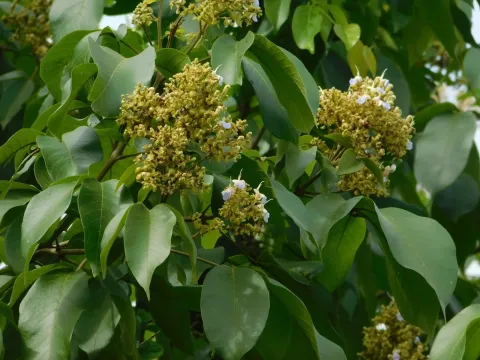
Vitex pinnata
Vitex pinnata
Vitex pinnata is a robust evergreen tree belonging to the Lamiaceae family. It is known for its distinctive pinnate leaves, which distinguish it from other species within the genus and contribute to its elegant appearance.
What the section contains
Vitex pinnata
This species is native to South and Southeast Asia. It thrives in tropical climates where the temperature remains consistently warm and rainfall is distributed throughout the year, allowing for continuous vegetative growth.
Regarding soil requirements, Vitex pinnata prefers deep, well-drained loamy soils. While it can adapt to various conditions, it performs best in soils with a slightly acidic to neutral pH level, avoiding areas prone to waterlogging.
The tree requires significant sunlight for optimal development. In forest settings, it often competes for canopy space, but in plantation scenarios, providing sufficient spacing is crucial to ensure every tree receives adequate light.
Climate adaptability is limited to frost-free zones. Temperatures below 15 degrees Celsius can cause stress to the plant, and any exposure to freezing conditions will result in severe damage or mortality of the specimen.
The primary economic use of Vitex pinnata is its high-quality timber. The wood is dense, durable, and highly resistant to termites and fungal decay, making it a preferred material for heavy-duty construction and furniture manufacturing.
In addition to timber, various parts of the plant are utilized in traditional medicine. The leaves and roots contain bioactive compounds, such as flavonoids and glycosides, which are used to treat inflammation and various infections.
The tree is frequently integrated into agroforestry systems. Its ability to thrive alongside other crops while providing shade and preventing soil erosion makes it an excellent choice for sustainable land management in tropical regions.
Its fruits serve as a food source in some rural areas and are also studied for potential industrial applications. The biomass generated by the tree can be processed into high-grade charcoal, which is valued for its clean-burning properties.
Ongoing research into the phytochemical profile of Vitex pinnata suggests further potential in the pharmaceutical industry, particularly in developing natural anti-inflammatory agents and antioxidants.
Fungal diseases, particularly those affecting the foliage during high-humidity seasons, are the most frequent threats. Leaf spots and powdery mildew can weaken the tree if not managed through proper canopy management and airflow.
Pests such as stem-boring beetles can cause significant structural damage to the wood, reducing its commercial value. Monitoring for signs of boring activity is essential to protecting timber quality.
Root rot is a common issue in poorly drained soils. Farmers must ensure that the planting site has an efficient drainage system to prevent water saturation, which is the primary catalyst for pathogen development.
Young plants are particularly vulnerable to herbivory and weed competition. Implementing a rigorous weeding schedule and protective measures for young saplings significantly improves survival rates in the initial years.
Integrated pest management, utilizing both biological controls and precise silvicultural practices, is the most effective approach for maintaining healthy Vitex pinnata plantations in tropical ecosystems.