
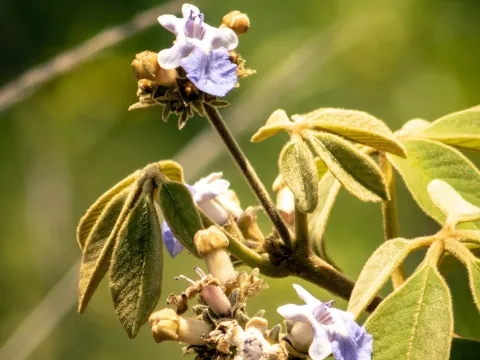
Vitex polygama
Vitex polygama
Sowing seeds of Vitex polygama should be carried out in the spring after the risk of frost has passed and the soil has warmed to at least 15-18 degrees Celsius. To achieve uniform germination, the seeds require a stratification period of one to two months at low, positive temperatures.
What the section contains
Vitex polygama
The optimal substrate for sowing is loose, well-drained soil mixed with sand or perlite. Seeds should be planted at a shallow depth of no more than 0.5–1 cm, ensuring constant moderate moisture until the first true leaves emerge.
When using a nursery method, sowing is carried out in protected structures during late winter or early spring. This approach significantly shortens the growing period and strengthens the root system of young plants before they are transplanted to their permanent location in open ground.
After transplanting seedlings, it is essential to provide sufficient space between plants. Since Vitex polygama is a perennial shrub, the planting scheme must account for its future volume and the expansion of its root system.
To accelerate growth and development during the early stages, root stimulants can be used, although moderation is required to avoid excessive vegetative growth at the expense of woody stem development.
Vitex polygama is a shrubby plant species belonging to the Lamiaceae family. This botanical species is valued for its high adaptability and specific chemical composition, derived from its origin in regions with tropical and subtropical climates.
The crop has high light requirements, preferring open, sunny locations protected from cold northern winds. Under low-light conditions, shoots become elongated, and both flowering intensity and the accumulation of biologically active substances in the leaves are sharply reduced.
The plant's soil preferences include light, fertile sandy or loamy soils with a neutral or slightly alkaline pH. Stagnant moisture in the root zone is detrimental to this species; therefore, a high-quality drainage layer is a mandatory requirement.
During the active vegetation period, Vitex requires regular watering, especially during dry summer months. As the shrub matures, its drought tolerance increases, allowing for reduced watering frequency without compromising the plant's overall health.
A key factor in successful agronomy is the application of balanced fertilizers with a prevalence of potassium and phosphorus during the preparation period for winter dormancy. Nitrogen fertilization should be completely avoided in the second half of summer to prevent the growth of non-hardened shoots before frost.
Vitex polygama possesses a high natural immune system; however, if agronomic practices are neglected, it may become susceptible to diseases typical of the Lamiaceae family. The primary threat comes from fungal diseases that thrive in conditions of high humidity and poor ventilation.
The most common pathologies include powdery mildew, manifesting as a whitish coating on leaf blades, and various types of root rot. To prevent these, one should avoid overcrowded plantings and ensure proper air circulation between the branches.
Pests that may parasitize the crop include spider mites and aphids, which feed on the cell sap of young leaves and shoots. Regular inspection of the underside of leaves allows for the early detection of pests and the implementation of timely control measures.
To protect against insects, biological products based on plant extracts are effective, as they do not disrupt the ecological balance of the site. In cases of massive infestation, the use of selective insecticides authorized for ornamental and medicinal crops is permitted.
Special attention should be paid to sanitary pruning, as damaged or diseased branches act as entry points for infections. Regular removal of dead wood from the bush significantly reduces the risk of disease outbreaks in subsequent years.