
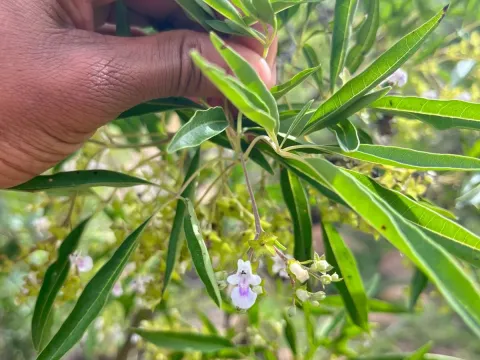
Vitex rehmannii
Vitex rehmannii
Vitex rehmannii is a perennial shrub belonging to the Lamiaceae family. Native to South Africa, it is known for its distinct botanical structure and hardiness within its natural range. The plant is increasingly recognized in horticulture for its ornamental value and adaptive potential.
What the section contains
Vitex rehmannii
The crop thrives in sunny, well-lit environments, requiring significant exposure to daylight to maintain vigor and stimulate healthy foliage development. It prefers warm climates and generally lacks tolerance for prolonged freezing temperatures, making greenhouse cultivation preferable in colder regions.
Regarding soil requirements, Vitex rehmannii demands well-draining substrates to prevent root rot, which is a common issue in waterlogged conditions. A fertile, slightly acidic to neutral soil composition is ideal for optimal nutrient uptake and long-term sustainability of the plant.
Agrotechnical practices involve consistent irrigation during the growth phase, supplemented by balanced fertilizer application to ensure steady development. Pruning is essential; it should be performed annually to maintain the desired shrub size, improve airflow, and encourage robust blooming cycles.
The economic utility of the plant spans from decorative landscape architecture to potential applications in herbal research. Its phytochemical profile makes it a subject of interest for those studying the genus Vitex, which is historically significant for its medicinal properties.
The primary pathological threats to this species include powdery mildew and fungal leaf spots, which typically appear when environmental humidity is high and ventilation is inadequate.
Pest management should focus on monitoring for spider mites and aphids, particularly in hot and dry climates where these pests can proliferate rapidly. Preventive scouting and the use of appropriate acaricides or systemic insecticides are recommended to maintain plant vitality.