
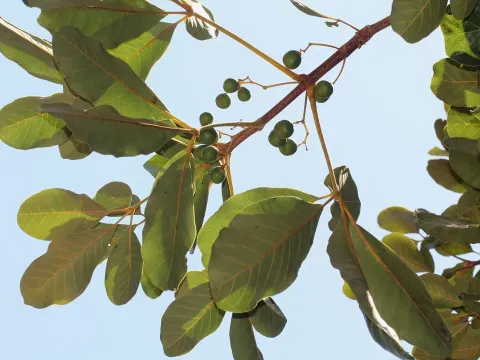
Vitex doniana
Vitex doniana
Propagation of Vitex doniana is primarily carried out using seeds, as stem cuttings show low success rates. The seeds have a hard seed coat, so scarification or soaking in warm water for 24 hours is essential to improve germination rates.
What the section contains
Vitex doniana
Sowing is conducted in well-prepared substrates in nurseries at the beginning of the rainy season, ensuring the necessary humidity for emerging seedlings. The optimal temperature for seed germination ranges between 25 and 30 degrees Celsius.
Once seedlings reach a height of 30–40 centimeters, they are transplanted to their permanent site. It is crucial to provide protection against direct sunlight and soil moisture loss during the first few months after planting.
Planting density in plantations varies based on the purpose: 4–5 meters apart for timber production, and up to 7–8 meters for fruit production.
The Vitex tree is light-demanding, requiring a site that remains open and well-lit throughout the entire day to support healthy growth and development.
Vitex doniana belongs to the Lamiaceae family and is a deciduous tree reaching heights of 15–20 meters. It is a characteristic species of African tropical flora, with a natural range extending through savannas and woodlands from Senegal to Ethiopia.
The crop prefers deep, well-drained sandy or loamy soils with a neutral to slightly acidic pH. The plant exhibits high drought tolerance due to a developed root system that penetrates deep into the soil profile.
For optimal growth, the tree requires an annual rainfall between 700 and 1500 mm. In waterlogged conditions, the tree is prone to rot, making proper drainage a fundamental requirement for establishing new plantations.
Vitex is well-adapted to the high temperatures typical of tropical climates. While it tolerates significant temperature fluctuations, it is critically sensitive to frost, which can result in the loss of the entire above-ground structure.
Agronomic practices include regular weeding around the base and mulching to conserve moisture, particularly during the first 2–3 years of the tree's life until the canopy closes.
The fruits of Vitex doniana are succulent black drupes, which serve as an important food source for local communities and as livestock fodder. Harvesting typically begins 5–7 years after planting.
A mature, well-developed tree can yield significant quantities of fruit, which ripen progressively at the end of the rainy season. The fruits are rich in vitamins and essential minerals, providing a valuable nutritional supplement.
Economic use also includes timber, which is noted for its durability and resistance to pests. The trunks of mature trees are suitable for construction work, furniture making, and local agricultural tools.
Leaves and bark are widely used in traditional medicine, where infusions and decoctions are prepared to treat gastrointestinal disorders and various skin infections.
The economic viability of growing this crop is driven by the multifunctional nature of the tree, positioning it as a promising species for agroforestry initiatives across tropical regions.
The primary threats to Vitex doniana include fungal infections that develop during waterlogging in the root zone. Symptoms typically appear as leaf wilting and bark necrosis on the lower stem.
The tree often suffers from infestations by leaf-eating insects, especially during dry spells when the plant's natural defenses are lowered. Preventive measures include timely sanitary pruning and the removal of infected branches.
In natural habitats, wood-boring pests pose a serious threat by damaging the structural integrity of the timber. Regular monitoring of the bark allows for early detection and targeted treatment.
High winds and tropical storms can cause windthrow, given the wood's relative brittleness in younger trees. Formative pruning helps develop a robust crown structure capable of withstanding wind loads.
Parasitic plants, such as mistletoe, may colonize older trees, depleting nutrients and weakening the host. Regular crown cleaning to remove these epiphytes is a standard and necessary agronomic practice.