
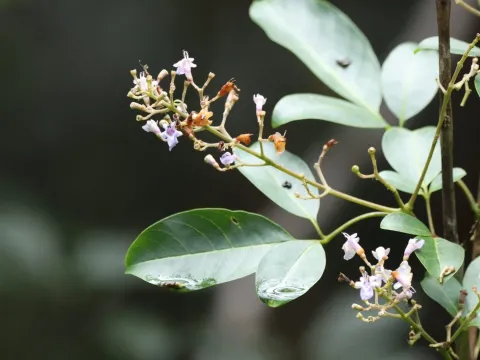
Vitex parviflora
Vitex parviflora
Vitex parviflora, commonly known as molave, is a species of flowering plant within the Lamiaceae family. Historically, it was classified under the Verbenaceae family due to similarities in floral structures and leaf morphology.
What the section contains
Vitex parviflora
The species is native to the tropical forests of Southeast Asia, specifically flourishing in regions like the Philippines. It thrives in both primary and secondary forest environments, showing a remarkable ability to colonize various soil types.
The plant requires a strictly tropical climate to prosper, characterized by consistent warmth and distinct wet and dry seasons. It cannot tolerate freezing temperatures, making it unsuitable for cultivation in temperate zones.
Optimal growth is achieved in well-drained soils, often thriving in limestone-based areas or fertile clay soils. While it exhibits tolerance to dry conditions once established, adequate moisture is essential during the early developmental stages of the saplings.
Agricultural management requires careful attention to spacing to ensure vertical stem development. Maintenance involves systematic pruning of side branches during the initial growth phase to optimize the quality and length of the trunk for future timber harvest.
The primary economic value of Vitex parviflora lies in its high-quality, dense, and durable timber, commercially referred to as molave wood. This wood is highly prized for being incredibly hard, heavy, and resistant to fungal decay and termite attacks.
Its industrial applications are extensive, ranging from high-end furniture and cabinet making to critical construction components, including beams, posts, and ship building. It is recognized as one of the most durable timbers in the region.
Secondary uses of the plant include the application of its leaves and bark in traditional medicine. Various preparations are documented for their potential anti-inflammatory and antiseptic properties, reflecting the ethnobotanical importance of the genus.
The yield potential is calculated based on the long-term cycle of timber production. Forest management plans focus on increasing the growth rate of trees while maintaining the density and structural integrity of the harvested heartwood.
Additionally, the tree provides ecological benefits, including soil stabilization and acting as a nectar source for various pollinators. Its dense canopy also provides significant shade, making it a viable candidate for tropical agroforestry systems.
Young plantations are susceptible to damage from various leaf-eating insects, which can impede photosynthetic capacity. Integrated pest management strategies are necessary to protect saplings until they reach a more resilient size.
Fungal pathogens represent a significant threat in high-humidity conditions where airflow is insufficient. These infections can attack the root system or bark, leading to progressive decay and loss of structural stability in the tree.
Improper soil drainage is a critical risk factor for Vitex parviflora, as waterlogging often leads to fatal root rot. Ensuring adequate soil aeration and avoiding low-lying areas with poor drainage is essential for plantation health.
Nematode infestations in the root zone are a persistent challenge in some regions, leading to reduced vigor and stunted growth. Implementing soil health management programs and using healthy seedlings is the primary defense strategy.
Extreme weather events, particularly high-velocity winds during typhoon seasons, can cause mechanical damage to the branches and trunks. Proper site selection and protective windbreaks are recommended for large-scale tree farming operations.