
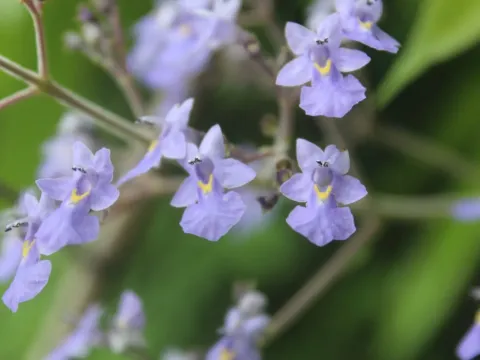
Vitex gaumeri
Vitex gaumeri
Vitex gaumeri, commonly known in its native range as yaxche, is a significant woody species belonging to the Lamiaceae family. The propagation of this culture is typically performed through seeds harvested from mature trees.
What the section contains
Vitex gaumeri
Seed germination requires stable warm temperatures and well-regulated moisture levels, mimicking the conditions of the tropical forest floor.
In nursery settings, seeds are sown in specialized potting mixes that provide excellent drainage to prevent early-stage damping-off diseases.
The optimal time for transplanting young saplings into the field is at the onset of the rainy season to facilitate rapid root establishment.
Spacing requirements are essential for this species, as it needs adequate sunlight and airflow to support its broad canopy structure as it matures.
Native to regions including Mexico and parts of Central America, Vitex gaumeri is well-adapted to tropical and subtropical climates.
The species demonstrates notable drought tolerance, allowing it to thrive in environments with distinct wet and dry seasons without the need for constant supplemental irrigation.
It prefers well-drained soil types, particularly those with limestone origins, where root oxygenation is high and waterlogging is naturally avoided.
The plant is highly photophilous and requires full sun exposure to reach its maximum potential in both height and wood density.
While tolerant of various soil conditions, moderate organic matter enrichment can significantly accelerate the growth rate of juvenile trees.
The primary economic output of Vitex gaumeri is its high-quality timber, prized for its durability and suitability for high-end carpentry and construction projects.
Beyond timber, the species is recognized for its traditional medicinal uses, with various parts of the plant being evaluated for bioactive compound content.
As a flowering species, it plays a vital role in local biodiversity, serving as a significant source of nectar for various pollinator species.
Sustainable harvesting of leaves and bark is practiced in some regions, contributing to non-timber forest product industries while preserving the longevity of the trees.
The yield of biomass is sustainable over the long term, provided that sound forest management and silvicultural practices are employed.
Root rot and other fungal infections are the primary threats, typically occurring if the cultivation site lacks sufficient drainage during heavy rainfall.
Insect pests, including various leaf-eating caterpillars and boring beetles, can cause localized damage, particularly in young, sensitive nursery plants.
Competition from invasive weeds during the establishment phase is a critical hurdle that can severely stunt the growth of young Vitex gaumeri trees.
Integrated pest management (IPM) strategies, including biological control agents, are recommended to maintain tree health without relying on heavy chemical use.
Regular sanitation and removal of dead or diseased branches are necessary to prevent the spread of localized infections within a plantation.