
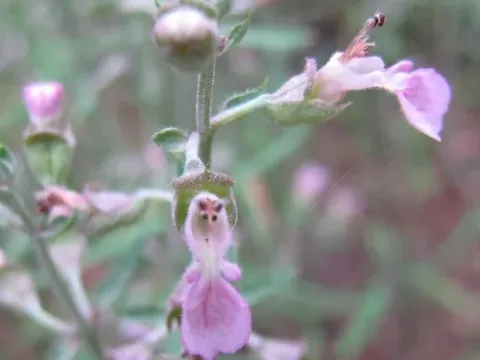
Cat thyme
Teucrium marum
Sowing seeds of cat thyme in temperate climates should ideally be performed in spring once soil temperatures reach 10-12 degrees Celsius.
What the section contains
Cat thyme
For greenhouse seedling production, seeds are sown in flats during March, ensuring sufficient light exposure for vigorous early plant development.
When direct-seeding into open ground, select weed-free plots, as the seedlings grow slowly and are easily outcompeted by aggressive weeds in the early stages.
Seeds should be sown at a shallow depth of no more than 0.5 centimeters, as they require light and loose soil contact for optimal germination rates.
Pre-soaking seeds in warm water or using natural stimulants can significantly improve emergence uniformity in field-grown conditions.
Cat thyme, a member of the Lamiaceae family, is a sun-loving plant that thrives in open, well-illuminated locations with excellent exposure to sunlight.
The crop demands specific soil conditions, performing best in light, calcareous, sandy, or rocky soils that provide superior drainage and prevent root saturation.
Originating from the Mediterranean region, the plant exhibits strong drought tolerance and performs poorly in heavy, waterlogged soil conditions.
In colder regions, plants may require winter protection, as they are sensitive to harsh frosts if consistent snow cover is not present to insulate the roots.
During the active growing phase, moderate irrigation is required, though excessive nitrogen fertilization should be avoided to maintain high essential oil content.
The yield of cat thyme biomass varies based on plant density and agronomic management, typically ranging between 1.5 to 2.5 metric tons of dry matter per hectare.
Peak accumulation of bioactive compounds occurs during the full bloom phase, making precise harvest timing critical for high-quality production.
The crop can be maintained in perennial stands for 4 to 6 years, after which plantation renewal is recommended to ensure consistent growth and quality.
Commercial utilization spans the medicinal and perfume industries, thanks to the plant's unique terpene profile and distinct aromatic properties.
Cat thyme serves as a valuable nectar source for bees and other pollinators, contributing to biodiversity and improving overall field health.
The primary threats to the crop include fungal pathogens, such as powdery mildew or root rot, which proliferate under high humidity and poor aeration.
Pests such as aphids and spider mites are common concerns, often attacking tender shoot tips during hot and dry summer months.
- Employing crop rotation strategies to minimize the buildup of soil-borne pathogens.
- Regular cultivation of inter-rows to eliminate weeds and improve soil aeration.
- Utilizing preventative bio-pesticide treatments at the first signs of pest infestation.
Poor soil aeration in heavy clay soils often leads to growth inhibition and increases the plant's vulnerability to various infectious diseases.
Reducing reliance on synthetic pesticides is a key practice for maintaining the organic integrity and medicinal quality of the harvested biomass.
Harvesting should be conducted during the full flowering stage, as this is when essential oil concentrations in the leaves and florets reach their maximum potential.
Stems are typically cut at 10-15 centimeters above ground level using specialized mechanical harvesters or traditional manual gardening tools.
The harvested material must be promptly moved to drying facilities to prevent heat buildup and the loss of volatile aromatic compounds.
Drying is performed in shaded, well-ventilated structures at temperatures not exceeding 40 degrees Celsius to preserve the plant's chemical integrity.
Once dried, the raw material is cleaned of impurities and packaged in airtight, opaque containers to protect it from moisture and light during storage.