
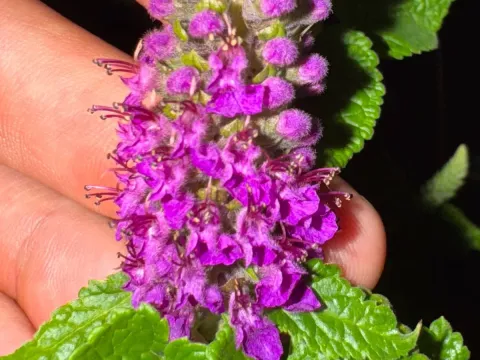
Caucasian germander
Teucrium hircanicum
Teucrium hircanicum, commonly known as Caucasian germander, belongs to the Lamiaceae family. It is a perennial herbaceous plant valued for its long, purple flower spikes that bloom in late summer.
What the section contains
Caucasian germander
Propagation is most successful through seeds or division of established clumps. Seeds should be sown in early spring in well-prepared, loose soil, keeping the area moist until germination occurs.
When starting from seed in containers, it is recommended to keep them in a cool, bright environment. Germination usually takes about two to four weeks depending on the soil temperature.
For mature plants, division should be performed in the spring. Carefully dig up the root system, divide it into sections with at least two or three healthy shoots, and replant immediately.
Spacing is essential for this species to ensure proper airflow. Placing plants approximately 35 centimeters apart helps maintain health and prevents overcrowding as the plants mature.
This plant thrives in full sun to partial shade. Originating from the Caucasus region, it is naturally adapted to rugged, dry environments and poor soils, making it quite hardy.
The ideal soil for Teucrium hircanicum is well-drained and slightly alkaline. If the soil is heavy clay, incorporating grit, sand, or gravel is necessary to improve drainage and prevent root rot.
While the plant is drought-tolerant once established, it requires regular watering during the first growing season. Consistent moisture promotes the development of a strong root structure.
Minimal fertilization is required for this plant. A light application of balanced granular fertilizer in the spring is sufficient to sustain vigorous growth and prolonged flowering.
Winter care involves cutting the plant back to the ground after the first frost or in early spring. In colder regions, applying a layer of organic mulch around the base provides essential protection.
Waterlogging is the primary threat to Caucasian germander. Excess moisture in the soil quickly encourages fungal issues and root decay, which are often fatal to the plant.
Pests like aphids may occasionally colonize the young, tender flower spikes. Regular monitoring and the use of insecticidal soap are typically enough to control these infestations.
Powdery mildew is a common issue if air circulation is poor or if the humidity remains consistently high. Pruning neighboring plants to increase airflow can significantly mitigate this risk.
Slugs and snails can occasionally cause damage to the foliage, especially in moist or shady spots. Using physical barriers or organic traps is a safe way to protect the plant.
To keep the plant healthy, avoid overhead watering. Aiming the water directly at the base of the plant keeps the foliage dry, which prevents the development of most foliar diseases.