
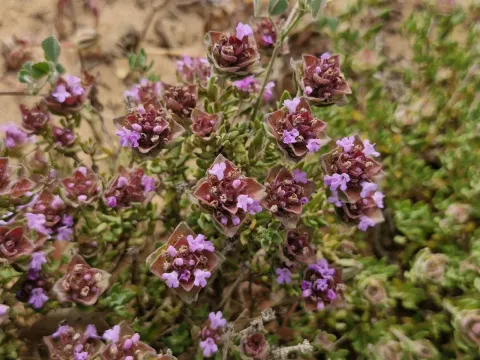
Camphor thyme
Thymus camphoratus
Camphor thyme (Thymus camphoratus) is a perennial subshrub belonging to the Lamiaceae family. It is an endemic species native to the southwestern coastal regions of Portugal, where it thrives in sandy soils.
What the section contains
Camphor thyme
The plant is highly specialized for well-drained, nutrient-poor, sandy or rocky substrates. It does not tolerate waterlogging, which often leads to rapid fungal degradation of the root system.
Optimal growth requires full sun exposure. Adequate light intensity is essential not only for biomass production but also for the synthesis of the distinct camphor-scented essential oils that define this species.
It is adapted to a Mediterranean climate, requiring mild winters. In cultivation, it is crucial to protect the plants from excessive frost if grown outside its native temperate range.
The cultural practices include moderate pruning to maintain the plant's structure and prevent it from becoming woody and sparse, which naturally occurs as the plant matures over time.
The harvesting process for Thymus camphoratus is timed to coincide with the peak flowering stage when the concentration of essential oil constituents is at its absolute maximum.
Harvesters typically use mechanical or manual tools to cut the leafy stems and inflorescences, ensuring that the base of the plant remains intact to allow for regrowth in the following cycle.
Post-harvest processing involves drying the plant material in shaded, well-ventilated areas. Controlled temperatures are maintained to prevent the volatilization of valuable camphor compounds.
Once dried, the herbs are threshed to separate the valuable leaves and flowers from the woody stems, which are usually discarded or used as low-grade mulch.
This species is valued commercially for its medicinal properties, including antiseptic and decongestant effects, as well as its fragrance profile in the cosmetics and perfumery industries.