
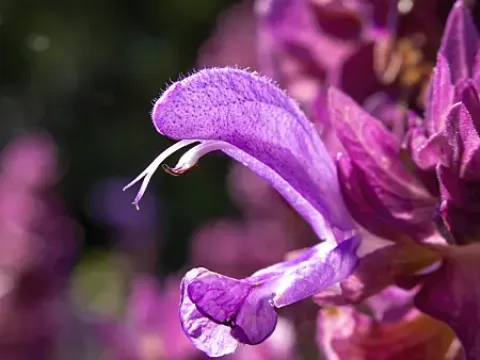
Canary Island sage
Salvia canariensis
Canary Island sage (Salvia canariensis) is a perennial subshrub belonging to the Lamiaceae family. It is endemic to the Canary Islands, where it thrives in rocky, well-drained habitats characterized by a warm, Mediterranean-like climate.
What the section contains
Canary Island sage
Botanically, this species is noted for its distinctive, triangular-hastate leaves and tall, branching flower spikes. The entire plant is covered in a dense, silvery-grey indumentum, which helps the plant conserve water in its native environment.
To cultivate this crop successfully, growers must provide excellent drainage. The plant is highly intolerant of wet feet, so light, sandy, or rocky soil mixes are ideal for preventing root rot and ensuring long-term health.
Climatic requirements are strict: Salvia canariensis is tender and will sustain significant damage if exposed to freezing temperatures. In regions with frost, it must be grown as a container plant and moved to a frost-free environment during winter.
In terms of agricultural and commercial utility, this sage is valued for its volatile oil content and as an ornamental specimen in landscaping. Its ability to tolerate high sun and heat makes it a niche but valuable crop for arid-climate horticultural production.
The primary concern for Canary Island sage is root rot caused by stagnant water, which remains the leading cause of plant mortality in nursery settings.
Powdery mildew represents a significant fungal threat, especially when plants are grown in poorly ventilated greenhouses where humidity levels are allowed to rise.
Insect pests, notably aphids and spider mites, can quickly infest the dense foliage, requiring prompt intervention with soaps or systemic pesticides.
Regular pruning to ensure adequate air circulation around the center of the plant is an essential preventative measure against both fungal and insect infestations.
Integrated pest management protocols, including monitoring and physical removal of infested leaves, are recommended to maintain plant vigor throughout the season.