
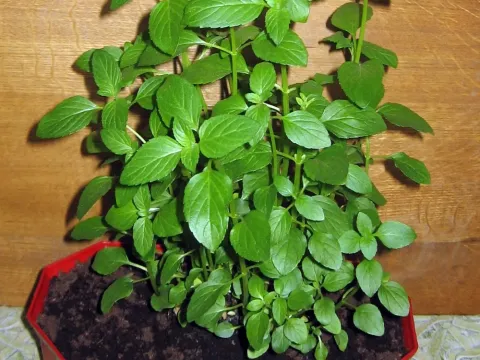
Carinthian mint
Mentha carinthiaca
Carinthian mint is most often planted vegetatively, using root division or stem cuttings. The best time to establish plantations is in early spring, as soon as the soil warms up to 8-10 degrees Celsius, or in early autumn, allowing the plants to root before the onset of hard frosts.
What the section contains
Carinthian mint
When using the seed method, sowing is carried out in the spring, but due to the high probability of losing varietal traits, this method is rarely used. For high-quality germination, seeds require stratification at lower temperatures for a month before sowing.
The planting depth of seeds should not exceed 0.5 cm, as they are very small and need light to activate germination. The soil must be kept moist throughout the period of seed germination and the development of the first true leaves.
Seedlings are planted using a 40x60 cm scheme, which ensures optimal nutrition for each plant. This planting density allows for the mechanization of inter-row maintenance and prevents overcrowding, which leads to the development of fungal infections.
After planting, the soil must be mulched or regularly loosened to prevent the formation of a dense crust, which hinders oxygen access to the roots. A high-quality start for the crop is the key to forming a powerful bush capable of producing high yields of greenery for several years.
Carinthian mint belongs to the Lamiaceae family and is a hybrid species that requires fertile, well-drained soils with a neutral or slightly acidic reaction. The crop prefers areas with high organic matter content, rich in nitrogen and potassium.
For normal development, the plant requires moderate but regular watering, as mint is extremely sensitive to substrate drying. Despite its love for moisture, water stagnation in the root zone is unacceptable, as it leads to rapid rotting of the underground parts.
The crop is light-loving, but in regions with hot summers, it needs light shading in the afternoon to avoid leaf burns and excessive evaporation of essential oils. The optimal temperature for vegetation is 18–25 degrees Celsius.
The planting area should be protected from prevailing winds, which can dry out the soil and damage delicate shoots. Good predecessors for mint are cereal crops, legumes, or vegetables that have been fertilized with organic matter.
An important success factor is the annual application of complex mineral fertilizers during the phase of intensive growth. Nitrogen application promotes active green mass growth, while potassium fertilizers increase the plant's resistance to unfavorable winter conditions.
The yield of Carinthian mint depends on the age of the plantation, light intensity, and the level of agronomy. Usually, the crop shows maximum productivity of green mass in the second and third year after planting, after which the rhizomes may require rejuvenation.
The average yield of fresh raw material per hectare in commercial cultivation is about 15–20 tons, depending on the number of cuts. During drying, the yield of marketable raw material is approximately 20–25% of the initial weight of the freshly harvested product.
The concentration of essential oil in the leaves reaches its maximum immediately before the start of the flowering phase. During this period, the plant accumulates the necessary components that determine its value for pharmacology and the food industry.
To increase the yield of essential oil, agronomists recommend harvesting in the early morning hours, when moisture evaporation is minimal and the concentration of volatile substances in glandular trichomes is maximal. Proper pruning stimulates secondary shoot growth, allowing 2-3 cuts per season.
The quality of the crop is determined not only by volume but also by the content of specific components in the oil, characteristic of this particular mint variety. Timely care of the plantations prevents leaf shrinking, which directly affects the appearance of the final product.
One of the most dangerous pests for Carinthian mint is the mint leaf beetle, which can destroy a significant part of the green mass in a short time. Also, aphids and spider mites, which feed on the sap of delicate leaves, can cause serious damage.
Among fungal diseases, the most common is rust, which manifests as brown spots on the underside of the leaf. The disease spreads rapidly in conditions of high humidity and poor ventilation of the area.
Powdery mildew also frequently affects plantings, forming a white coating on the leaf surface, which suppresses photosynthesis and reduces crop quality. Prevention of this disease consists of adhering to a proper watering regimen and preventing overcrowding.
Combating diseases and pests requires a comprehensive approach that combines agrotechnical methods, such as removing infected plant parts, with the use of biological agents. The use of strong pesticides on medicinal crops is often limited by strict standards.
Timely crop rotation and compliance with spatial isolation from wild mint species significantly reduce the risk of pest invasion. Regular phytosanitary monitoring of the plantation allows for the containment of infection outbreaks at the initial stages of development.
Harvesting of Carinthian mint is carried out in dry weather, cutting the aerial part of the plant at a height of 5–10 cm from the ground level. This allows the crop to recover quickly and prepare for the next growth cycle.
The optimal phase for harvesting is mass budding, preceding the full opening of flowers. It is during this period that the plant has the most pronounced aroma and maximum therapeutic effect, which is important for the production of essential oils.
Immediately after cutting, the raw material must be transported to the processing or drying site to avoid the process of self-heating within the mown mass. Prolonged storage in piles leads to leaf spoilage and loss of essential components.
Drying is carried out in shaded, well-ventilated rooms or in special dryers at temperatures no higher than 35-40 degrees. Excessively high temperatures destroy volatile compounds, deteriorating the quality and aroma of the finished product.
Dried mint should be stored in airtight containers, protected from direct sunlight and high humidity. Under these conditions, the product retains its properties for 12–18 months, suitable for subsequent sale or industrial processing.