
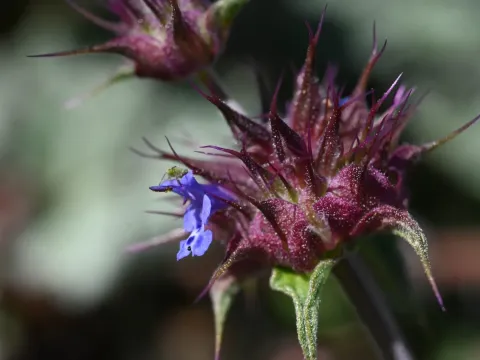
Chia sage
Salvia columbariae
Chia sage, scientifically known as Salvia columbariae, is an annual herb within the Lamiaceae family. It is naturally adapted to cool-season growth patterns in its native habitats, typically germinating after early moisture in the autumn or spring.
What the section contains
Chia sage
In agricultural settings, direct seeding should be performed in early spring once the risk of heavy frost has passed. The soil temperature must be conducive to germination, typically ranging between 15 and 20 degrees Celsius.
Due to the tiny size of the seeds, they should be sown shallowly, ideally at a depth of no more than 0.5 to 1 centimeter. Surface broadcasting followed by light rolling is an effective method for ensuring good seed-to-soil contact.
Row spacing should be maintained at 30 to 45 centimeters to allow for adequate air circulation and to facilitate mechanical weed control. Dense stands can lead to poor development of flower spikes and reduce overall seed quality.
Proper irrigation during the first two weeks post-planting is crucial for establishing the crop. Once established, the plants demonstrate remarkable drought tolerance and require minimal additional watering throughout the season.
Chia sage thrives in well-drained, sandy or gravelly soils. It is highly intolerant of heavy, clay-rich soils that retain excess water, as these conditions rapidly lead to root decay and overall plant failure.
As a xerophytic plant, it requires full sun exposure for at least 8 to 10 hours a day. Any degree of shade during the vegetative or flowering phases will lead to elongated, weak stems and significantly lower yields.
The plant is adapted to neutral to slightly alkaline soil pH levels. It is quite resilient to low-nutrient soils, meaning that heavy fertilization is rarely necessary and can often be detrimental to the plant's natural morphology.
Temperature management is largely handled by the timing of planting. While it can withstand periods of high desert heat, the most productive growth occurs during mild temperatures that allow for full development of the inflorescences.
Excessive humidity, especially during the flowering period, should be avoided. High moisture levels in the air during this stage can interfere with pollination and promote the development of mold on the developing seeds.
The primary economic output of Chia sage is its nutritious seed. These seeds have been a historical staple in many diets due to their high content of omega-3 fatty acids, dietary fiber, and various essential minerals.
Productivity is highly correlated with the presence of pollinators. Since the plant is highly attractive to bees and beneficial insects, maintaining a healthy population of pollinators nearby is essential for maximizing seed set.
Under optimal conditions, the plant produces several tiered whorls of flowers, each containing a substantial number of seeds. Careful management of these flower stalks is the primary determinant of a high-yielding season.
The crop's market potential is growing as interest in ancient grains and traditional superfoods increases. Consumers value the seeds for their versatility in beverages, baked goods, and as a healthy topping for various meals.
To ensure consistent yields, growers should focus on selecting sites with consistent solar input and preventing weed competition during the early stages of growth, which allows the plant to allocate energy to seed production.
The most significant threat to Chia sage crops is root rot, typically caused by waterlogged soil conditions. Implementing proper drainage systems is the best prophylactic measure against this type of fungal pathogen.
Aphids are the most common insect pests, particularly during the warm spring months. They target the succulent new growth and flower stalks, which can lead to stunted plant development and reduced seed quality.
Weed management is critical, as Chia sage seedlings are slow to establish and can be easily outcompeted by aggressive grasses or broadleaf weeds in the first month of the growing cycle.
Bird damage can occur during the final stages of seed maturation. If the crop is located near large avian populations, bird netting or other deterrents may be required to preserve the harvest.
Crop rotation is strongly recommended to prevent the buildup of soil-borne pests. Avoid planting Chia sage in soil that has previously hosted other members of the Lamiaceae family within the last three years.
Harvesting Chia sage is a delicate process because the seeds do not mature all at once. Harvesting should begin when the flower whorls turn dry and brown, indicating that the seeds inside are fully mature.
Hand-harvesting remains the most effective method for small-to-medium scale producers. By cutting the flower spikes and placing them in paper bags, growers can capture any seeds that naturally drop during the drying process.
Mechanical harvesting requires careful calibration. The equipment should be set to a low vibration level to prevent the seeds from shattering, and it is often best performed when the stalks have reached a uniform dryness.
Post-harvest drying is essential to prevent spoilage. Spreading the harvested spikes on trays in a well-ventilated, shaded area for several days ensures the seeds reach a moisture level suitable for long-term storage.
After cleaning and winnowing to remove chaff and plant debris, the seeds should be stored in airtight, cool, and dark containers. This preserves the integrity of the essential oils and extends the shelf life of the final product.