
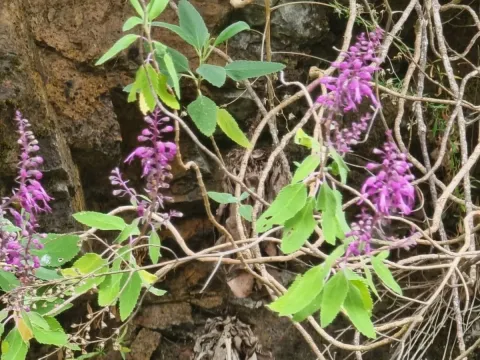
Madeira germander
Teucrium betonicum
Teucrium betonicum, commonly known as Madeira germander, is a perennial plant belonging to the Lamiaceae family. It is native to the island of Madeira and is typically propagated by seeds sown in the spring.
What the section contains
Madeira germander
For successful cultivation, use a seed-starting mix in trays, maintaining a temperature between 18 and 20 degrees Celsius. Ensure the seeds are surface-sown or lightly covered, as they require light for optimal germination.
Seedlings should be kept in a bright, well-ventilated area to prevent damping-off. Once they develop true leaves, they can be pricked out into individual containers for further development.
Acclimatization of the plants before transplanting into the garden is essential to ensure they survive outside conditions. Late spring is the best time for final planting once all frost risks have passed.
Spacing should be adequate to allow for lateral growth and airflow, which is critical for the long-term health of this aromatic perennial.
This species thrives in sunny locations with full exposure to sunlight. A bright environment is necessary to encourage flowering and maintain the plant's characteristic compact habit.
Well-draining, sandy, or rocky soils are ideal for Teucrium betonicum. It does not tolerate heavy or waterlogged soil, which can quickly lead to root decay.
Maintenance involves minimal intervention; it is a drought-tolerant plant once established. Water only during extended dry spells to prevent moisture stress.
Light feeding with organic compost in the spring helps support vegetative growth without promoting excessive, weak stems.
As it is not fully hardy in cold climates, winter protection such as mulch or moving containers indoors is recommended to ensure survival through freezing temperatures.
The primary threats to Madeira germander are related to moisture management. Excessive dampness often leads to root rot and fungal infections of the stems.
Powdery mildew may occur if the plants are crowded and air circulation is insufficient, necessitating careful spacing and pruning.
Pests like spider mites can become an issue in hot, arid conditions, causing the foliage to fade and lose its healthy appearance.
Aphids can occasionally infest the soft new growth, but they are generally manageable through manual removal or gentle insecticidal soap applications.
Proactive monitoring and removing any decaying foliage significantly reduce the risk of disease spreading throughout the entire plant population.
Harvesting is best performed during the peak of the flowering period when the essential oils and active compounds are at their peak concentration.
Using sharp shears, harvest the top sections of the stems, ensuring that enough of the plant remains to allow for continued seasonal growth.
Dry the harvested material in a shaded, well-ventilated area to preserve the integrity of the aromatic compounds and the color of the flowers.
Avoid direct sunlight during the drying process, as UV light can degrade the volatile oils that give the plant its characteristic fragrance.
Once completely dried, store the product in airtight, opaque containers kept in a cool and dry place to maintain maximum potency and shelf life.