
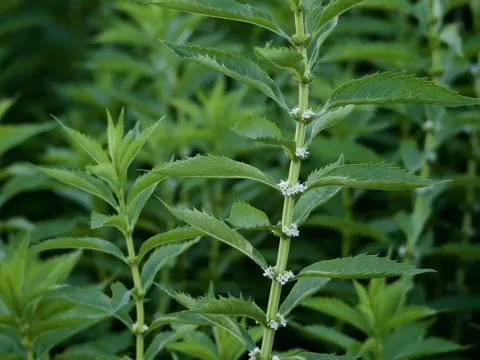
Lycopus lucidus
Lycopus lucidus
Lycopus lucidus, commonly known as marsh horehound, is a perennial herb belonging to the Lamiaceae family. In agricultural practices, it is typically propagated through the division of rhizomes, which ensures rapid establishment and uniform crop density.
What the section contains
Lycopus lucidus
For seed propagation, stratification is highly recommended to improve germination rates. Seeds should be sown in early spring or late autumn in moist soil, kept at a shallow depth to ensure they receive sufficient light for successful germination.
The plant demonstrates vigorous growth and spreads quickly through underground horizontal rhizomes. When establishing a commercial crop, proper spacing is essential to prevent overcrowding, which can lead to weakened stems and lower yields.
Choosing the right site is crucial, as the plant prefers stable, consistently moist conditions. Once established, it can easily adapt to the site and often requires minimal replanting over several seasons.
Preparation of the field involves thorough soil cultivation and the incorporation of organic matter to provide the nutrients required for the plant's rapid vegetative development during the first year.
Lycopus lucidus is a moisture-loving species that performs best in damp, marshy environments or low-lying areas with high water tables. Consistent soil moisture is the primary requirement for successful cultivation.
Rich, loamy soils or peat-based substrates provide the optimal foundation for growth. The plant thrives in environments that mimic its natural wetland habitat, benefiting from high levels of nutrients available in such soils.
While the plant can tolerate partial shade, full sun exposure is preferred for large-scale production. Adequate light intensity is vital for the optimal accumulation of secondary metabolites, which are essential for its medicinal quality.
The species is remarkably winter-hardy, with rhizomes capable of surviving freezing temperatures beneath the soil surface. This makes it an ideal candidate for cultivation in temperate climates without complex winter protection.
Maintenance includes light weeding during the early stages of growth until the plant forms a dense, self-sustaining canopy. After the first season, the plant is usually capable of outcompeting most weed species independently.
The primary harvest consists of the aerial parts of the plant, which are collected during the flowering period. Yields of green mass are significant and depend on the management of soil moisture and fertility levels.
The plant is highly valued for its medicinal properties, particularly in treating circulatory issues and thyroid-related conditions. Its chemical profile includes a rich composition of phenolic compounds and flavonoids.
Rhizomes are also utilized for their starch content, which in certain cultures has historical significance as a food source. This dual utility enhances the economic viability of the crop for modern producers.
To ensure peak medicinal potency, timing the harvest to the onset of full flowering is essential. Harvesting too early or too late can lead to variations in the concentration of active ingredients.
Consistent production requires the periodic renewal of the plantation every few years, as rhizome mats can become excessively dense, which eventually limits the uptake of nutrients and overall vigor.
Lycopus lucidus exhibits natural resistance to many common agricultural pests, largely due to the specific volatile compounds present in its leaves, which act as a natural defense mechanism.
The main threats to the crop are fungal infections associated with excessive water stagnation and poor soil aeration. These conditions can cause root rot, significantly impacting the overall yield and plant health.
Prevention involves ensuring adequate drainage and avoiding overly dense plantings. If fungal outbreaks occur, removing and destroying the affected plants is the most effective approach to stop the spread of infection.
Weed management is only a concern during the initial establishment phase. Once the plant has formed a thick mat of foliage, it effectively suppresses competitive flora without the need for chemical intervention.
Maintaining the purity of the planting material is vital. Ensuring that the rhizomes used for propagation are healthy and free from soil-borne pathogens is the first step in successful crop management.
Harvesting is performed by cutting the aerial foliage at approximately 10-15 centimeters above the ground. This preserves the root system, allowing the plant to regenerate for subsequent growing seasons.
After collection, the material should be processed immediately to prevent oxidation. Drying in well-ventilated, shaded environments at temperatures not exceeding 40 degrees Celsius preserves the chemical profile.
Mechanized harvesting tools can be utilized for larger fields, provided they are calibrated for the specific height requirements to maintain the quality of the harvested medicinal raw material.
Rhizomes are typically harvested in the late autumn after the aerial parts have withered. After washing and cleaning, they can be dried or processed for culinary or industrial applications.
Properly dried material should be stored in moisture-proof, light-resistant containers. Under these conditions, the herb retains its therapeutic effectiveness for several years, ensuring long-term storage viability.