
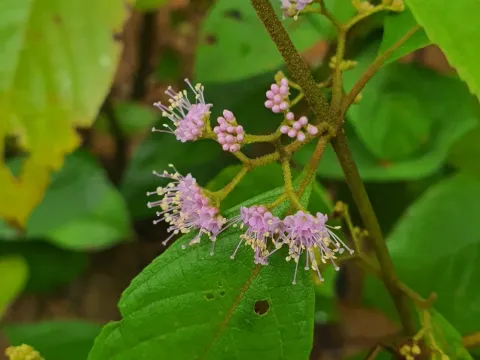
Long-leaved beautyberry
Callicarpa longifolia
Callicarpa longifolia, commonly known as the long-leaved beautyberry, is a perennial shrub belonging to the Lamiaceae family. Native to the tropical regions of Southeast Asia, this species is prized for its ornamental berries and aesthetic foliage.
What the section contains
Long-leaved beautyberry
The plant thrives in warm, humid climates and requires a frost-free environment to maintain its vigor. In colder latitudes, it is typically cultivated in containers that can be moved indoors during the winter months.
It prefers well-draining, fertile soil that is slightly acidic to neutral. High organic matter content significantly improves growth rates, while avoiding waterlogged conditions is critical for long-term survival.
Sun exposure should be managed carefully; while the plant enjoys bright light to produce vibrant fruits, partial shade during the peak of summer helps prevent leaf scorch and dehydration.
Maintenance includes light pruning to keep the shrub's shape, alongside regular fertilization using a balanced NPK ratio during the growing season. Adequate watering is vital, especially during prolonged dry spells.
Root rot caused by poor soil drainage is the most significant threat to Callicarpa longifolia. Excessive moisture creates an environment conducive to fungal growth, which can quickly compromise the root system.
Spider mites are common pests that tend to attack the shrub in dry conditions. Keeping the foliage misted and maintaining proper environmental humidity can help discourage these infestations effectively.
Scale insects may infest the stems and leaves, extracting plant nutrients and potentially leading to leaf yellowing or dieback. Manual removal combined with horticultural oil treatments is often an effective intervention.
Powdery mildew may occur if the plant is situated in a location with poor air circulation or excessive shade. Proper spacing and proactive management of plant density are key strategies to minimize this risk.
Monitoring the plant for signs of stress or nutrient deficiency is essential for successful cultivation. Integrated pest management (IPM) practices, such as encouraging natural predators, are recommended for long-term health.