
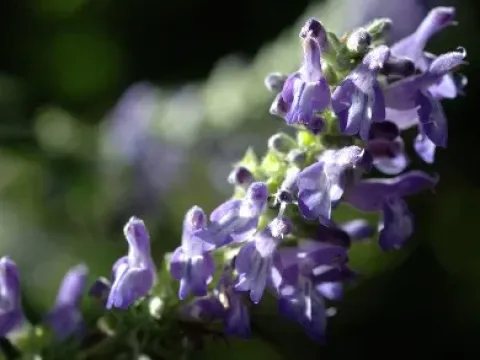
Many-spiked sage
Salvia polystachya
Many-spiked sage belongs to the Lamiaceae family and is a perennial herb with a well-developed taproot system. For industrial-scale cultivation, both direct field seeding and seedling methods are used, with the latter providing more uniform germination.
What the section contains
Many-spiked sage
The optimal time for sowing is early spring when the soil temperature reaches 10–12 degrees Celsius. Seeds require shallow covering, as they need sufficient light for proper germination.
Preliminary seed treatment includes stratification for several weeks, which significantly increases germination rates under field conditions. Row spacing of 45–60 centimeters is recommended to ensure high-quality aeration and ease of maintenance.
In temperate regions, transplanting seedlings into open ground is carried out after the danger of late frosts has passed, typically in late May. This allows the plants to establish a strong root system before the onset of autumn cold.
For a successful start, it is important to maintain constant control over substrate moisture, while avoiding waterlogging, which is detrimental to the young seedlings of this sage species.
This sage species has high light requirements; therefore, cultivation areas must be as open as possible and protected from strong winds. The crop demonstrates high drought tolerance, although moderate watering during active growth promotes increased biomass.
The soil should be light and well-drained, as the plant reacts poorly to heavy clay soils. The optimal acidity range for normal development is between 6.0 and 7.5 pH.
Agricultural techniques include regular soil loosening, which facilitates oxygen access to the roots and prevents the formation of a dense surface crust. Mulching between rows with organic materials helps maintain soil structure and controls weed growth.
The crop responds positively to moderate applications of potassium and phosphorus fertilizers, which stimulate flowering and increase the concentration of essential oils in the vegetative mass. Excessive nitrogen fertilizers can reduce the concentration of valuable compounds.
During the winter, many-spiked sage requires minimal protection in northern regions, as it possesses sufficient cold hardiness provided there is no high soil moisture in the root zone.
Fungal diseases, which develop in conditions of excessive air humidity, pose the primary threat to plantations. Root rots and powdery mildew are the most common issues when proper air circulation is lacking.
To combat diseases, it is recommended to conduct preventive treatments with bio-fungicides and strictly adhere to watering regulations. Crop rotation is a vital agricultural practice that avoids planting sage in areas previously occupied by other Lamiaceae members.
Among pests, spider mites and aphids are frequently encountered, damaging the tender leaves and shoots of the plant. In case of massive outbreaks, it is advisable to use soft-action insecticides.
Slugs and snails can cause damage to young plantings during rainy seasons; therefore, timely weeding and cleaning the area of plant residues, which serve as shelter for pests, are highly recommended.
Regular monitoring of crop health allows for the identification of infection sites at early stages, preventing large-scale losses and maintaining the quality of commercial products.
Harvesting is carried out during the mass flowering period, when the concentration of biologically active substances and essential oils in the aerial parts reaches its peak. Usually, this occurs in mid-summer.
Raw material collection is performed either mechanically or manually by cutting the upper parts of the shoots. It is crucial to work in dry weather to avoid rotting of the harvested material during the drying process.
Cut greenery should be sent immediately for drying in well-ventilated rooms or specialized dryers at a temperature not exceeding 40 degrees Celsius. Overheating the raw material leads to the loss of aromatic properties.
After drying, the plant is threshed or crushed, depending on the intended use. Storing the finished product requires airtight packaging to prevent the evaporation of volatile components.
Properly harvested and dried many-spiked sage retains its pharmacological properties for up to two years, provided that temperature regimes are maintained and the material is kept away from direct sunlight.