
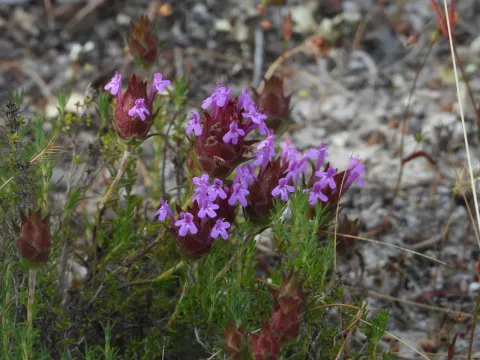
Lotus-headed thyme
Thymus lotocephalus
The sowing of Lotus-headed thyme seeds should be initiated in late March or early April in a controlled environment. Due to the very small size of the seeds, they should be sown on the surface and lightly pressed into the growing medium without burying them deep.
What the section contains
Lotus-headed thyme
Germination requires a stable temperature between 20 and 22 degrees Celsius. Seedlings typically emerge within two to three weeks, after which they should be placed in a bright, well-lit location to prevent spindly growth and ensure healthy stem development.
Transplanting into open ground is scheduled for May once the risk of spring frosts has completely passed. Spacing between plants should be maintained at 30–40 cm, which is crucial for maximizing air circulation and preventing stagnant moisture around the roots.
Vegetative propagation, including division of mature clumps or cuttings, is another viable method usually performed in late summer. This approach significantly speeds up the production cycle compared to starting from seeds, ensuring faster establishment of the herb patch.
Soil preparation is a vital prerequisite for successful sowing. The field must be cleared of perennial weeds, as the young seedlings are relatively sensitive to weed competition during their establishment phase in the first few months.
Lotus-headed thyme (Thymus lotocephalus) belongs to the Lamiaceae family and is native to Mediterranean climates, making it a sun-loving species. It requires full sun exposure for at least 6–8 hours daily to thrive and produce its signature aromatic compounds.
The crop demands a well-drained, sandy, or stony soil structure. Drainage is the most important factor in site selection; waterlogged soils quickly lead to root rot, which is the primary cause of plant failure in non-Mediterranean settings.
The plant prefers neutral to slightly alkaline soil conditions. Over-fertilization with nitrogenous compounds is discouraged, as it promotes lush foliage growth at the expense of oil quality; balanced phosphorus and potassium fertilizers are preferred.
While drought-tolerant once established, the plants require moderate irrigation during the early growth stages or periods of extreme summer heat. Excessive humidity should be avoided by ensuring adequate spacing between individual plants in the field.
Winter hardiness is limited; therefore, in colder regions, providing winter protection with gravel mulching or protective covers is recommended to prevent crown rot during thaw cycles or periods of prolonged ground freezing.
The economic value of Lotus-headed thyme lies in its high-quality biomass used for culinary and cosmetic purposes. The yield reaches its peak potential from the second year onwards, once the plant has fully established its root system.
Harvesting is best conducted during the period of full bloom, when the essential oil content is at its highest. It is advised to harvest in the morning, immediately after the dew has evaporated but before the intense heat of the day reaches its peak.
Average yields of dried biomass range from 1.5 to 3 metric tons per hectare depending on site conditions. Proper agronomic management allows for multiple harvests per season in regions with long, warm growing periods, provided the plants are allowed sufficient recovery time.
Post-harvest processing involves rapid drying in shaded, well-ventilated areas to prevent the loss of essential oils. Keeping drying temperatures below 40 degrees Celsius ensures that the final product retains its vibrant color and intense, pleasant fragrance.
Storage should be handled using airtight, light-protected containers in a cool, dry environment. Maintaining these storage conditions is critical for preventing degradation of the aromatic compounds that define the quality of the commercial thyme crop.
Fungal diseases, particularly those affecting the roots and stems, are the primary threat, often resulting from excessive moisture levels. Phytophthora and Fusarium wilts are common in fields where soil drainage is inadequate or humidity is consistently high.
Pests such as aphids and spider mites can cause significant damage by feeding on the tender young shoots. Regular monitoring of the canopy is recommended to identify outbreaks early and prevent them from compromising the quality of the herbal harvest.
Although less common, some beetle species may occasionally affect the foliage. The use of chemical pesticides should be strictly avoided due to the herb's use in food processing, favoring instead biological control agents or targeted IPM strategies.
Crop rotation is an essential management practice to avoid the buildup of soil-borne pathogens. A minimum interval of 4 years is recommended before planting thyme back into the same plot, especially following other members of the Lamiaceae family.
Hygiene practices in the field, including the sterilization of cutting tools and the prompt removal of infected plant debris, are fundamental in preventing the spread of diseases and ensuring the longevity of the herb plantation.