
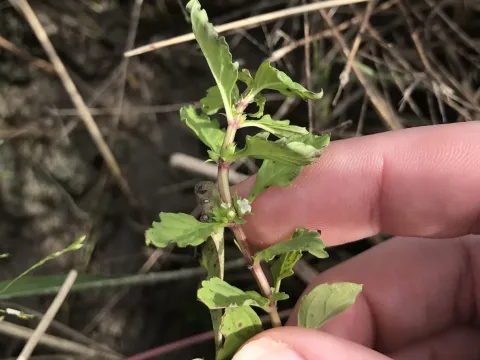
Lycopus ramosissimus
Lycopus ramosissimus
Lycopus ramosissimus is a perennial herbaceous plant belonging to the Lamiaceae family. It is typically found in wetland ecosystems, marshes, and along riparian zones, which dictates its specific environmental needs.
What the section contains
Lycopus ramosissimus
For agricultural cultivation, this crop requires consistently moist, nutrient-rich soils. A soil pH ranging from 5.5 to 7.0 is considered ideal for optimal nutrient uptake and plant health.
The plant thrives in temperate climates with high precipitation levels. It demonstrates significant cold hardiness, allowing it to survive throughout the winter in varied climatic zones.
Agrotechnical management must prioritize irrigation. Unlike many upland crops, Lycopus ramosissimus does not tolerate drought and requires a steady water supply to maximize biomass production.
Botanically, the plant is characterized by its highly branched stem structure. This morphology allows for a high density of leaves, which are the primary focus of harvest for medicinal purposes.
Lycopus ramosissimus possesses natural chemical defenses, including essential oils, which provide a degree of inherent resistance to many common agricultural pests.
Slugs and snails represent a notable threat in areas with high humidity, as they readily feed on the tender young leaves during the early stages of plant development.
Powdery mildew may occur if the planting density is too high, leading to reduced airflow and increased humidity levels trapped within the canopy of the crop.
Root rot represents a challenge in poorly drained fields. Even though the plant likes moisture, it still requires sufficient soil aeration to prevent fungal colonization of the roots.
Integrated pest management strategies are recommended to maintain the quality of the raw herbal material, focusing on crop rotation and monitoring plant spacing to minimize disease risk.