
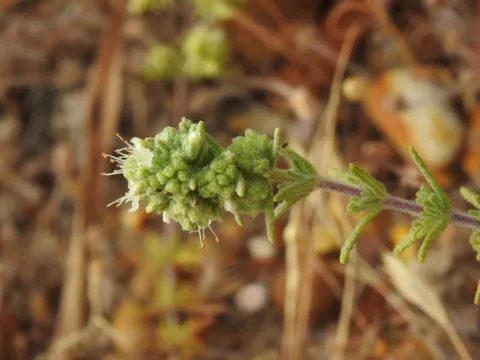
Algarve germander
Teucrium algarbiense
Algarve germander (Teucrium algarbiense) belongs to the Lamiaceae family. It is a perennial subshrub native to the Algarve region of Portugal, characterized by its resilient nature and aromatic foliage.
What the section contains
Algarve germander
The plant thrives in Mediterranean-type climates, requiring significant exposure to sunlight throughout the growing season. It exhibits high drought tolerance once established, making it suitable for xeriscaping.
Soil requirements dictate the use of well-drained, sandy, or rocky substrates. It naturally adapts to alkaline soil conditions and performs poorly in compact, waterlogged environments which impede root development.
Agronomic management involves minimal irrigation cycles and avoiding organic fertilizers that could provide too much nitrogen, which promotes weak growth. Pruning after the flowering phase helps maintain a compact, healthy structure.
Commercially, this species is cultivated for the horticultural market and as a potential source for bioactive compounds in the pharmaceutical industry. Its secondary metabolites make it a subject of biochemical interest.
Root rot is the primary physiological threat caused by excessive soil moisture and poor drainage. Ensuring high air permeability around the roots is essential for long-term plant viability.
Fungal pathogens such as powdery mildew can affect the foliage under conditions of high relative humidity and poor air circulation, necessitating strategic spacing of individual plants.
Insects like aphids may colonize the young, succulent shoot tips during the spring flush. Integrated pest management should focus on maintaining natural predator balance.
Winter damage is a significant risk in cooler regions. Providing protective cover or moving potted specimens to a greenhouse is required to prevent frost-induced tissue death.
Competition from aggressive weeds can stunt development in young plantations. Regular manual weeding or mulching with inert gravel helps manage this issue effectively.