
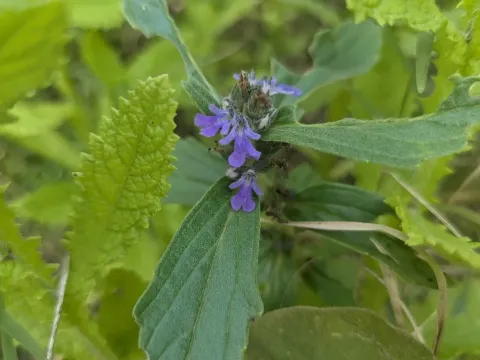
Ajuga integrifolia
Ajuga integrifolia
Ajuga integrifolia is a hardy herbaceous perennial belonging to the Lamiaceae family. Native to diverse climates ranging from high-altitude plateaus to semi-arid regions of Africa and Asia, it has evolved strong physiological mechanisms to withstand fluctuating temperatures and varying light intensity.
What the section contains
Ajuga integrifolia
Successful cultivation of this crop depends on selecting well-drained, porous soils. It thrives in neutral to slightly alkaline pH environments. Since the plant is sensitive to waterlogging, site preparation must prioritize excellent moisture management, specifically preventing stagnant water around the root zone which can trigger crown rot.
Regarding climate, the plant exhibits excellent drought tolerance, though supplemental irrigation is recommended during the early growth stages to establish a deep root system. Intense sunlight promotes the concentration of essential secondary metabolites, which are the primary interest for pharmacological processing.
The agronomic management of Ajuga integrifolia focuses on maintaining soil aeration and managing plant density. Standard planting protocols suggest spacing that allows for proper airflow, preventing the development of micro-environments prone to fungal growth, especially during periods of high ambient humidity.
The agricultural and economic utility of this plant is centered on its medicinal properties. As an herbal crop, it is harvested for its phytochemical content, particularly its diterpenoids, which are utilized in the manufacturing of anti-inflammatory and antiseptic pharmaceutical formulations.
Fungal pathogens represent the most significant threat to Ajuga integrifolia crops, particularly root rot and various leaf spots. These infections are often triggered by improper water management or poor air circulation, necessitating strict adherence to drainage and spacing protocols.
Insect pests, including aphids and spider mites, are common challenges in field production. These pests feed on the nutrient-rich sap of the plant, weakening its vigor and potentially acting as vectors for viral diseases, which can drastically reduce yield quality and overall biomass.
Integrated pest management (IPM) strategies are essential for maintaining crop health. This includes the use of biological control agents and, when necessary, the application of targeted biopesticides. Chemical pesticides should be used sparingly to maintain the purity of the medicinal product.
Crop rotation remains a fundamental practice to prevent the build-up of soil-borne pathogens. Planting Ajuga integrifolia in succession on the same plot without a rest period can lead to significant soil fatigue and an increase in susceptibility to indigenous diseases.
Regular field inspection is crucial for the early detection of stress factors. By monitoring leaf color and root health, growers can implement corrective measures, such as adjusting irrigation or performing sanitation, to prevent localized problems from becoming field-wide losses.