
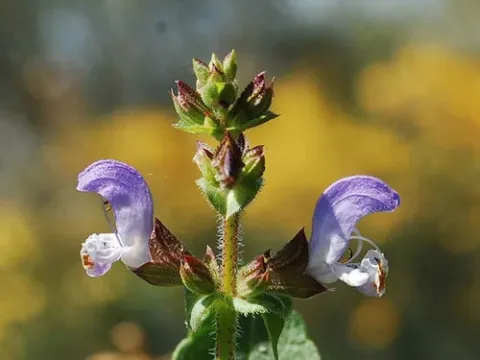
Algerian sage
Salvia algeriensis
Algerian sage (Salvia algeriensis) is a perennial herbaceous plant belonging to the Lamiaceae family, native to the arid and rocky regions of Northern Africa.
What the section contains
Algerian sage
The plant thrives in full sun exposure, which is crucial for the biosynthesis of aromatic compounds and essential oils within its leaves and flowers.
In terms of soil, it requires well-drained, sandy or gravelly textures that prevent water stagnation, as the root system is highly prone to rot in waterlogged conditions.
It exhibits remarkable drought tolerance, making it an excellent candidate for agricultural production in arid zones where water resources are limited.
Commercial utilization focuses on the extraction of essential oils, valued in the flavor, fragrance, and pharmaceutical industries for their unique aromatic profile.
Sowing should be performed in early spring once the soil temperature consistently exceeds 12-15 degrees Celsius to ensure vigorous germination.
Seedlings are often started in greenhouse trays before transplanting to the field to achieve a more uniform and dense canopy in the growing season.
The seeds should be covered with a very thin layer of substrate, approximately 0.5 to 1 centimeter, to allow sufficient light exposure for germination.
Standard field layouts involve row spacing of 60 to 75 centimeters, allowing enough space for mechanical weeding and proper air circulation between plants.
Maintaining adequate soil moisture during the first three weeks after sowing is essential to establish a healthy and productive stand.
Fungal diseases constitute the primary threat to Algerian sage, particularly when humidity levels are kept too high during the vegetative growth stages.
Powdery mildew is a frequent issue that affects leaf tissue, requiring timely application of fungicides to prevent economic yield losses.
Root rot, often caused by poor drainage or overwatering, is a destructive condition that can wipe out entire sections of a plantation.
Insect pests such as aphids and spider mites can infest the crop, causing stunted growth and reducing the overall quality of the harvested biomass.
Integrated Pest Management (IPM) strategies, including crop rotation and the introduction of beneficial insects, are highly recommended for sustainable farming.
Harvesting timing is critical and must coincide with the peak flowering stage to maximize the concentration of active essential oils in the plant material.
Mechanical harvesters are typically employed to cut the top 30-40 centimeters of the plant, ensuring that the woody base remains intact for regrowth.
Immediate post-harvest processing is necessary, as fresh biomass can degrade quickly due to moisture content and ongoing metabolic activity.
Drying is performed in climate-controlled environments at temperatures below 40 degrees Celsius to avoid the volatilization of delicate aromatic compounds.
Once dried, the herb should be stored in opaque, airtight containers in a cool environment to maintain its potency for commercial distribution.