
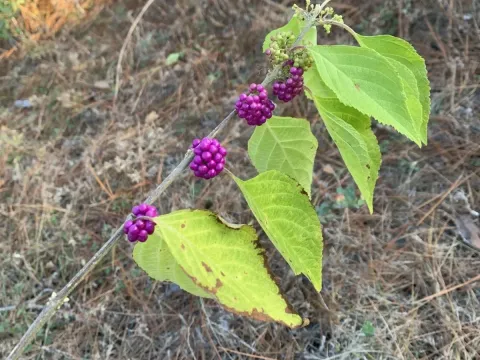
American beautyberry
Callicarpa americana
Propagation of Callicarpa americana can be achieved through both seeds and vegetative methods. Seeds should be sown in autumn directly into the ground or in cold frames to undergo natural stratification.
What the section contains
American beautyberry
For spring sowing, seeds require cold stratification at temperatures between +2°C and +5°C for approximately two months to break dormancy and ensure high germination rates.
Vegetative propagation via softwood cuttings is considered the most reliable method for maintaining specific plant characteristics. Cuttings are taken in mid-summer and placed in a humid, well-draining substrate.
Rooting hormones can be used to accelerate the development of the root system, allowing for a healthy sapling to be established by the following growing season.
Transplanting into the field is best performed in early spring or autumn, provided the soil moisture is sufficient to support initial growth before the onset of winter.
The American beautyberry is a member of the Lamiaceae family. It is a deciduous shrub native to the southeastern United States, thriving in woodland edges and moist soils.
The plant prefers fertile, well-draining loamy soils with a pH ranging from neutral to slightly acidic, ensuring healthy root development and foliage growth.
While the plant is hardy, it requires protection from harsh, drying winds in colder zones. In hot climates, regular irrigation is essential during the berry-forming stage.
Sunlight exposure influences the plant's architecture: full sun promotes a dense, compact shrub, whereas partial shade encourages a more graceful, open growth pattern.
Proper site selection must avoid waterlogged soils, as stagnant moisture can easily cause root decay and negatively impact the plant's overall vigor.
The yield of American beautyberry is mainly characterized by its high ornamental value and the production of bioactive berries, which form in dense, colorful clusters.
Plants generally reach reproductive maturity in their second or third year, producing abundant fruit clusters on stems that have been pruned correctly to encourage new growth.
Biological productivity is enhanced by adequate sunlight, which triggers the deep, metallic-purple coloration characteristic of the species in late autumn.
Beyond landscaping, the berries are not commonly consumed by humans, though they serve as a critical food source for wild birds during the winter months.
Pharmacological interest focuses on the foliage and fruits, which contain compounds like callicarpenal, demonstrating natural repellent properties against ticks and mosquitoes.
Callicarpa americana is generally resistant to major pests and diseases, but it remains susceptible to issues when environmental conditions are suboptimal.
Powdery mildew is the most common fungal disease, typically occurring during periods of high humidity and poor airflow within the foliage of the shrub.
Insect pests include aphids and spider mites, which may infest the plant during prolonged dry spells, leading to stunted growth or yellowing leaves.
Good agricultural practices, such as annual thinning of old branches and maintaining adequate plant spacing, are vital to preventing the spread of these pathogens.
When necessary, biological insecticides or fungicides should be applied, ensuring all manufacturer guidelines are followed to protect the environment and beneficial insects.
Harvesting for ornamental or research purposes should occur when the berries reach full biological maturity, indicated by their vibrant purple hue.
The harvest period typically falls in late autumn, often after leaf drop, which allows for clean, efficient collection of the berry clusters.
If the berries are intended for decorative dried arrangements, they should be gathered in dry weather to maintain their color and prevent post-harvest decay.
Storage of the harvested material requires cool, well-ventilated conditions to ensure that the chemical compounds and physical integrity of the berries remain stable.
Careful handling during harvest is important to avoid damaging the brittle stems, which can be reused for future floral design applications.