
Madeira germander
Teucrium abutiloides
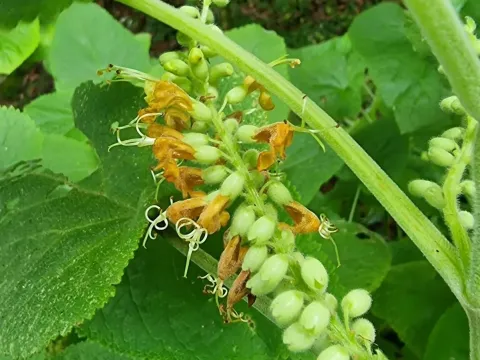
Madeira germander (Teucrium abutiloides) is a rare evergreen subshrub belonging to the Lamiaceae family, native to the island of Madeira. The plant is botanically distinguished by its soft, heart-shaped leaves and tall, elegant spikes of pale yellow or creamy flowers that appear in well-lit conditions.
What the section contains
Madeira germander
The climate requirements for this species are specific, favoring mild, Mediterranean-like environments. It is not frost-hardy and should be kept in areas where temperatures remain consistently above freezing, making it an excellent candidate for conservatory or greenhouse cultivation in cooler regions.
Regarding soil conditions, Teucrium abutiloides demands excellent drainage. The ideal substrate should be light, porous, and nutrient-rich, mimicking the rocky yet organic-rich soil found in its natural habitat. Avoid using heavy, water-retaining clay soils as they quickly cause root rot.
Light intensity is a critical factor for healthy growth. While it appreciates full sunlight, excessive heat during mid-afternoon can be stressful. Providing partial shade or dappled light during the hottest hours helps maintain leaf turgor and prevents scorching of the delicate, velvety foliage.
Agricultural maintenance involves careful monitoring of moisture levels. Irrigation should be deep but infrequent, allowing the soil to partially dry out between waterings. Regular pruning after the blooming period is necessary to maintain a tidy habit and encourage the development of new, flowering stems for the next cycle.
The plant is susceptible to common greenhouse pests, primarily aphids and spider mites, which thrive in dry indoor conditions. Regular inspection of the leaf undersides is crucial, as early detection allows for physical removal or the use of mild horticultural soaps before an infestation becomes severe.
Fungal pathogens such as mildew or root rot are typical threats associated with poor air circulation and excessive dampness. Improving ventilation around the plant and ensuring the container has sufficient drainage holes are the most effective preventive measures against these biological risks.
In terms of practical usage, this plant is primarily valued for its botanical uniqueness and aesthetic appeal in horticulture. It is frequently collected by plant enthusiasts and used as a specimen plant in specialized botanical gardens, where it serves as a representative of island biodiversity.
Propagation is generally performed through stem cuttings taken in late summer. Harvesting of plant material for multiplication requires clean, sterilized tools to prevent the transmission of pathogens, and cuttings should be placed in a well-draining rooting medium under high-humidity conditions to ensure successful establishment.