
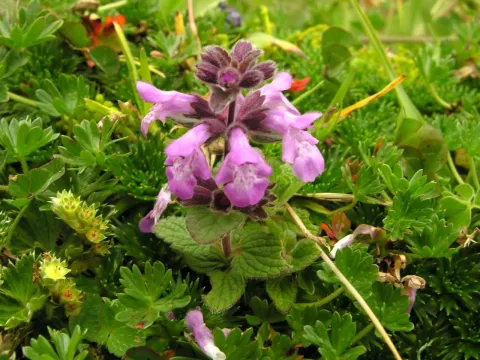
Elliptic hedge-nettle
Stachys elliptica
Elliptic hedge-nettle (Stachys elliptica) belongs to the Lamiaceae family. It is a perennial herbaceous plant that naturally thrives on rocky slopes and mountainous regions, showing high adaptation to arid environments.
What the section contains
Elliptic hedge-nettle
For successful cultivation, the selection of sites with excellent drainage is paramount. The plant prefers loose, sandy loam, or loamy soils with a neutral to slightly alkaline pH, mirroring the conditions of its native habitats.
Optimal development occurs in open, well-lit locations. Exposure to direct sunlight is essential for the plant to accumulate secondary metabolites, which are often the primary target for commercial and medicinal utilization.
The culture exhibits high resistance to temporary drought conditions due to a well-developed root system. However, providing moderate moisture during the active vegetative growth phase significantly improves the overall yield and plant vigor.
The plant is not overly demanding in terms of thermal requirements and displays significant winter hardiness. This makes it suitable for cultivation in various temperate regions, provided that waterlogging is prevented during the winter and spring thaw.
Harvesting should be timed to coincide with the period of peak flowering, when the concentration of volatile oils and medicinal compounds in the aerial parts is at its absolute maximum.
The stems should be harvested using sharp tools to ensure clean cuts, leaving the basal rosette intact to facilitate regrowth and maintain the plant's long-term health and productivity.
Post-harvest processing involves drying the plant material in shaded, well-ventilated areas or in controlled-environment drying chambers, maintaining temperatures below 40 degrees Celsius.
Properly dried material must retain its natural color and aroma, which are reliable indicators of the preservation of its active chemical constituents and market quality.
Final storage of the dried product requires dry, dark, and cool conditions, utilizing airtight or breathable containers depending on the intended duration of storage to maintain shelf-life stability.