
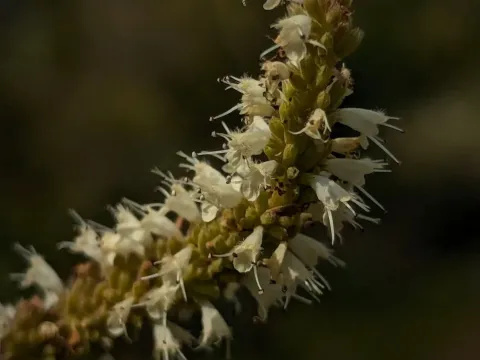
Elsholtzia polystachya
Elsholtzia polystachya
Sowing Elsholtzia polystachya should be carried out in early spring when the soil temperature consistently reaches 8-10 degrees Celsius.
What the section contains
Elsholtzia polystachya
The seeds demonstrate excellent results when sown in late autumn, allowing for natural stratification throughout the winter months.
Due to the small size of the seeds, they should be placed at a shallow depth of approximately 0.5-1 cm to ensure proper light absorption for germination.
Implementing a row spacing of 45-60 cm is recommended to allow for adequate ventilation and mechanical maintenance during the growing season.
For regions with shorter growing periods, starting the crop as seedlings in protected structures is a viable method to ensure timely maturity.
This crop thrives in open, sunny locations as it is highly photophilous and requires maximum sunlight for the development of aromatic compounds.
Fertile, loamy, or sandy-loam soils with a neutral pH level provide the ideal growing medium for this species to reach its full potential.
Moderate moisture is necessary throughout the vegetative phase, but the plant is sensitive to waterlogging, necessitating good field drainage.
The plant performs best under temperate conditions with a preferred temperature range of 20-25 degrees Celsius for active biomass growth.
Adding organic matter or balanced mineral fertilizers significantly improves plant vigor and the subsequent yield of the secondary metabolites.
Yield metrics for Elsholtzia polystachya are largely determined by the precision of agricultural timing and the maintenance of the nutrient base.
Under optimal industrial cultivation, growers can expect biomass yields ranging from 150 to 200 centners per hectare of cultivated land.
The essential oil yield is highly dependent on the harvesting stage, with full bloom being the optimal time for maximum concentration.
Yield quality can be enhanced through systematic nitrogen and phosphorus supplementation during the initial stages of rapid growth.
Standardized agrotechnical practices ensure both a high volume of raw green mass and a high content of volatile aromatic substances.
The primary threats to this crop include various fungal diseases triggered by excessive humidity or poor air circulation within the plant canopy.
Powdery mildew represents a significant risk that can degrade both the quality of the essential oil and the overall harvest volume.
Insect pests such as aphids and leaf beetles can cause localized damage, requiring careful monitoring and integrated pest management strategies.
Disease prevention is best achieved through effective crop rotation practices and ensuring proper spacing between individual plants.
Careful selection of eco-friendly protective measures is essential to preserve the purity of the aromatic harvest for industrial processing.
Harvesting is executed during the peak flowering phase when the essential oil profile is at its most concentrated and chemically stable.
Mechanical harvesting is common, where the plants are cut at a height of 10-15 cm to allow for potential secondary regrowth and plant health.
Collected plant material must be processed or dried immediately to prevent degradation of oils caused by enzyme activity and moisture buildup.
Drying should be conducted in shaded, well-ventilated conditions at moderate temperatures to maintain the characteristic aroma and herb color.
Proper post-harvest storage in dry, dark containers is critical to prevent the evaporation of essential oils and to ensure product shelf life.