
Egyptian sage
Salvia aegyptiaca
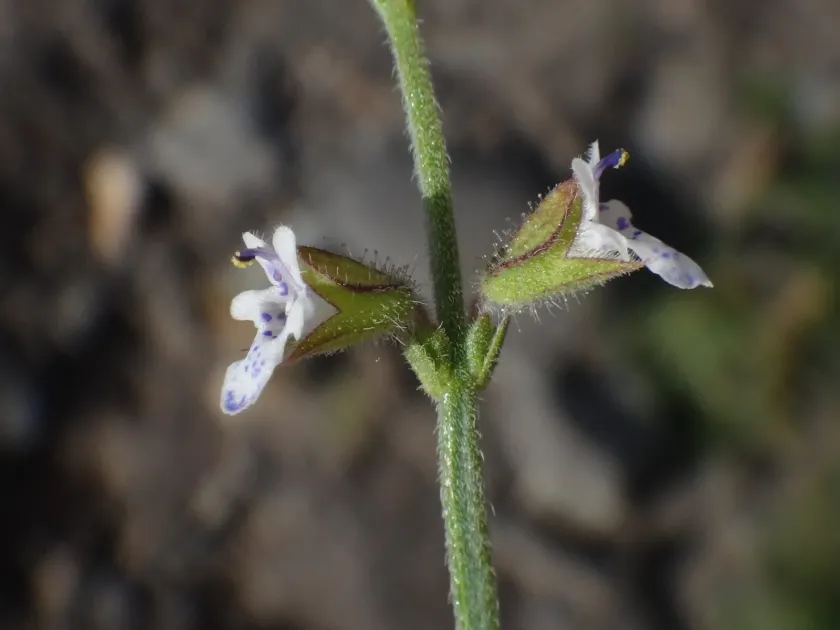
Description
Sowing dates
Egyptian sage is a typical xerophytic plant, so sowing periods are strictly aligned with seasonal moisture availability. In its native habitats, seeds germinate naturally following the first rainfall events that occur in autumn or early winter.
For agricultural purposes, seeds are sown in prepared soil at a shallow depth of 1 to 2 cm. Because the seeds are tiny, firm contact with the soil is essential to facilitate capillary water movement, which ensures high and uniform germination rates.
The optimal soil temperature for germination is between +15°C and +20°C. In commercial production, row planting with spacings of 45 to 60 cm is standard, as this layout allows for effective mechanical weeding and crop management throughout the season.
Seedlings exhibit slow early development, making weed control in the first 4–6 weeks of life a critical factor for success. Cultivators often employ light cultivation or mulching to suppress competing vegetation without damaging the delicate root systems.
While the plant is technically a perennial, in commercial agricultural cycles, it is often managed as a short-lived perennial, with fields being replanted every 3–4 years to maintain maximum biomass yield and vigor.
Growing requirements
Salvia aegyptiaca, a member of the Lamiaceae family, is highly adapted to the harsh conditions of deserts and semi-deserts in Africa and Southwestern Asia. It possesses exceptional resilience to high heat and prolonged periods of drought.
The plant thrives in light-textured, well-drained sandy or stony soils. Waterlogging is the primary enemy of this crop, as it quickly causes root rot and other fungal issues, so site selection must prioritize excellent soil drainage.
Full solar exposure is mandatory for the plant's metabolism. Even partial shading can lead to elongated, weak stems and a significant reduction in the concentration of essential oils, which are the main economic products of this species.
Soil fertility requirements are modest, but the plant responds well to controlled applications of phosphorus and potassium fertilizers. Excess nitrogen should be avoided as it stimulates excessive leafy growth at the expense of secondary metabolites.
A neutral to slightly alkaline soil pH is preferred. Due to its physiological plasticity, Egyptian sage exhibits moderate salt tolerance, making it an ideal candidate for reclaiming degraded or saline soils in arid climates.
Yield
The yield of Egyptian sage is highly variable and depends on irrigation management and environmental factors. While the plant is drought-tolerant, supplemental drip irrigation significantly improves biomass and essential oil production.
The primary target product is the aerial portion of the plant (leaves and inflorescences). Harvesting at the correct physiological stage—specifically the onset of mass flowering—is crucial for obtaining high-quality material rich in active compounds.
Under favorable management, dried biomass yields typically range from 0.5 to 1.5 tons per hectare. Success depends on maintaining optimal plant density and ensuring that weeds do not compete with the crop during the early establishment phase.
Seeds are also a viable byproduct of this crop, utilized in the pharmaceutical and cosmetic industries. Seeds should be collected once they reach full maturity, characterized by a deep brown color and a dry, brittle inflorescence.
The economic sustainability of this crop stems from its ability to yield valuable secondary metabolites in environments where water is a limiting factor, providing a stable income source in desert agriculture.
Main diseases and pests
The most significant threats to Egyptian sage in field conditions are root-rot pathogens, particularly those in the Fusarium and Rhizoctonia genera. These diseases are almost exclusively caused by over-irrigation or soil compaction preventing drainage.
Pests, particularly spider mites and various aphid species, frequently infest the plants during hot, dry spells. They cause leaf deformation and reduced photosynthetic efficiency, which necessitates regular monitoring and the use of targeted biological controls.
Tarnished plant bugs can pose a risk to seed development, potentially lowering the viability of the harvested seed crop. Integrated pest management strategies, focusing on biological balance, are preferred over broad-spectrum chemical sprays.
Powdery mildew may occur if atmospheric humidity levels remain high for extended periods, especially in poorly ventilated fields. Maintaining proper row spacing is the most effective preventative measure against this fungal pathogen.
Weeds are the primary competitor for limited soil moisture. A proactive weeding schedule is essential, as the slow initial growth of the sage makes it particularly vulnerable to being outcompeted in the early stages of development.
Harvesting
Harvesting is performed by mowing the aerial parts of the plant. For essential oil production, it is vital to time the harvest precisely at the start of the flowering period when oil content is at its maximum.
After mowing, the raw material must be dried promptly in shaded, well-ventilated structures. Drying temperatures must be kept strictly below +40°C to prevent the loss of volatile aromatic compounds and ensure product quality.
Once dried, the biomass is cleaned and sorted to remove stems and impurities before final packaging. Maintaining a low-moisture environment is essential to prevent post-harvest microbial growth or degradation of the aromatic components.
Seed harvesting is conducted using specialized harvesters when the flower spikes have fully browned. The machinery must be adjusted to minimize mechanical impact and prevent the seeds from shattering prematurely.
Proper storage in moisture-proof containers in a cool, dark location allows the harvested product to retain its quality for several seasons, providing flexibility for the grower in timing their sales to pharmaceutical manufacturers.