
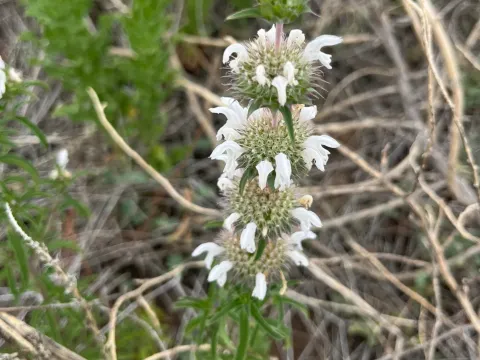
Lemon beebalm
Monarda pectinata
Lemon beebalm (Monarda pectinata) is a heat-loving plant, and planting schedules must align with local climate zones. In temperate regions, direct outdoor seeding is conducted in spring once the soil temperature consistently reaches 12–15 degrees Celsius.
What the section contains
Lemon beebalm
For more uniform germination and earlier production, a greenhouse seedling method is preferred. Sowing in seed trays should begin in March or early April, ensuring adequate supplemental light for young plants.
The seeds are tiny, requiring shallow sowing at a depth of no more than 0.5–1 centimeter. Maintaining consistent moisture in the seed-starting mix is vital until emergence, which typically occurs within 14 to 21 days.
Transplanting hardened seedlings to their permanent field location should only occur after the risk of late spring frost has completely passed. For commercial production, a spacing of 40–50 centimeters between rows is recommended.
In regions with mild winters, dormant fall seeding is possible, though it requires precise timing to prevent seeds from germinating too early and succumbing to subsequent freezing temperatures.
As a member of the Lamiaceae family, Monarda pectinata thrives in open, sunny environments. Excessive shading significantly reduces essential oil concentration and causes the stems to become weak and spindly.
This crop is not particularly demanding regarding soil type; however, it achieves the best development in well-draining, light sandy or loamy soils with a neutral to slightly alkaline pH level.
The plant is highly drought-tolerant, a trait inherited from its origins in the arid regions of North America. Waterlogged soil conditions are lethal to this species and frequently lead to root rot.
During the active growth phase, moderate fertilization with balanced mineral nutrients is beneficial. It is crucial to avoid nitrogen excess, as this promotes foliage growth at the expense of oil quality.
While the plant handles wind reasonably well, mounding or light hilling around the base is recommended in exposed, windy sites to prevent the stems from lodging during the height of the flowering season.
The primary threat to Monarda pectinata is powdery mildew, which typically proliferates under conditions of high humidity and poor air circulation within the plant canopy.
Root rot often occurs if the soil drainage is inadequate, leading to water accumulation in the rhizosphere, which is particularly detrimental during the cool, damp early spring months.
Common pests that may affect these plantings include aphids and spider mites. These pests extract cell sap, leading to distorted foliage and an overall decrease in plant vigor.
Pest management and disease prevention are best achieved through sound cultural practices, including regular weeding, thinning of dense patches, and careful monitoring of irrigation schedules.
Chemical intervention is generally limited for this crop, as it is frequently harvested for culinary uses and medicinal herbal preparations where residue management is of high priority.
Harvesting should coincide with the peak of the mass-flowering stage, as this is when the secondary metabolites and essential oil concentrations are at their highest levels for extraction.
The crop is harvested by cutting the aerial portions of the plant 10–15 centimeters above the soil surface, ensuring the crown remains undamaged to support healthy regrowth for future seasons.
Once cut, the plant material must be processed immediately to prevent heating and the loss of valuable volatile compounds, which evaporate quickly when the biomass is left in piles.
Drying is performed in shaded, well-ventilated areas or climate-controlled drying units at temperatures not exceeding 40 degrees Celsius to preserve delicate biological activity.
After the material has dried, the leaves and inflorescences are processed via mechanical threshing or steam distillation to isolate the fragrant essential oils used in various industries.