
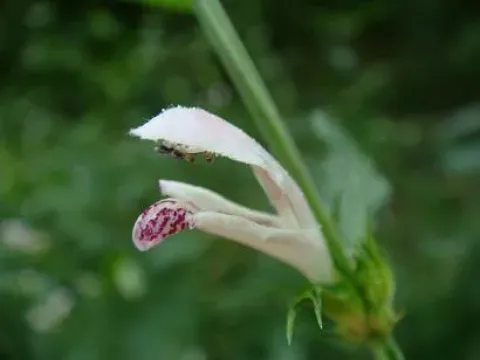
Leonurus macranthus
Leonurus macranthus
Sowing Leonurus macranthus is typically performed in early spring or during late autumn as a dormant seeding. Autumn sowing is often preferred as it allows seeds to undergo natural stratification in the soil, leading to more uniform germination.
What the section contains
Leonurus macranthus
Seeds are small and require shallow placement. A planting depth of 1–2 centimeters is optimal. Placing seeds too deep may result in poor seedling emergence due to limited energy reserves for soil penetration.
For commercial production, a row spacing of 45 to 60 centimeters is recommended. This spacing facilitates mechanical weeding and ensures that each plant has sufficient access to light and nutrients for vigorous development.
The seeding rate ranges from 4 to 6 kilograms per hectare, depending on seed quality. Accurate distribution is crucial to avoid overcrowding, which can lead to increased humidity and disease pressure within the crop canopy.
Compacting the soil lightly after sowing is a beneficial practice. This improves the capillary movement of moisture from the lower soil layers to the seed zone, which is critical for successful germination.
Leonurus macranthus thrives in open, sun-exposed areas. Full sun is essential for the accumulation of secondary metabolites, which provide the plant its pharmacological value. Shaded sites lead to poor plant vigor.
Fertile loamy or chernozem soils with a neutral or slightly alkaline pH are ideal. The crop performs poorly in heavy, waterlogged, or overly acidic soil, which restricts root expansion and increases vulnerability to rot.
While the plant shows good resilience against short-term drought once established, it requires adequate soil moisture during the spring vegetative phase to build enough biomass for a profitable harvest.
Drainage is a critical factor in site selection. Areas where water ponds after rainfall should be avoided, as stagnant water is a primary cause of root system failure in this species.
Regular inter-row cultivation is essential during the first months to manage weeds and maintain optimal aeration of the rhizosphere, allowing the plant to establish its deep root system efficiently.
The yield of dried aerial parts can reach 15–25 centners per hectare under optimal agronomic conditions. Productivity typically peaks during the second and third year of the perennial plantation cycle.
In the first year, plants focus on forming a vegetative basal rosette and root system. Therefore, harvesting should be delayed or limited during the first season to ensure long-term plantation health.
Strategic fertilization with phosphorus and potassium during early spring regrowth enhances stem density and the production of flowering branches, which are the main components of the harvested crop.
Harvesting must coincide with the mass blooming stage. This is the period when the concentration of essential active compounds, such as flavonoids and alkaloids, is at its highest in the foliage and blossoms.
Drying procedures must be carefully managed to maintain quality. Quick, low-temperature drying in ventilated facilities prevents the degradation of delicate active ingredients and preserves the product's natural color.
Powdery mildew is a common threat in dense plantings with poor air circulation or high humidity. Managing plant density and removing crop debris from the previous season can significantly reduce infection risk.
Root rot diseases are more prevalent in poorly drained soils. Avoiding waterlogged fields and rotating crops is the best preventive measure for maintaining healthy and productive stands.
Aphids represent the most significant insect threat. They colonize new growth and flower spikes, causing leaf curling and reduced growth, which directly compromises the market quality of the herbal product.
Sucking insects can also damage the reproductive organs of the plants. Integrated pest management strategies, utilizing biological agents or selective treatments, are recommended to protect the crop without chemical residues.
Regular field scouting is necessary to identify pest infestations early. Immediate action prevents population explosions and helps maintain the standard quality required for herbal pharmaceutical use.
Harvesting involves cutting the leafy stems at a length of approximately 30–40 centimeters. The lower, woody parts of the stem should be avoided to ensure high-quality material for processing.
Weather conditions during harvest are critical; only dry, sunny days should be chosen. Harvesting moist or wet material results in rapid fermentation, which ruins the quality of the medicinal harvest.
Post-harvest handling must be efficient. The raw material should be transported to the drying area within a few hours of cutting to prevent heating in the bins or piles.
If seeds are the target crop, harvesting should occur only after the seed capsules turn brown. Mechanical threshing and subsequent cleaning and drying to 14% moisture are standard procedures.
Post-harvest residue can be incorporated into the soil as organic matter. This practice supports soil structure and adds nutrients, which benefits the plantation's performance in the subsequent growing season.