
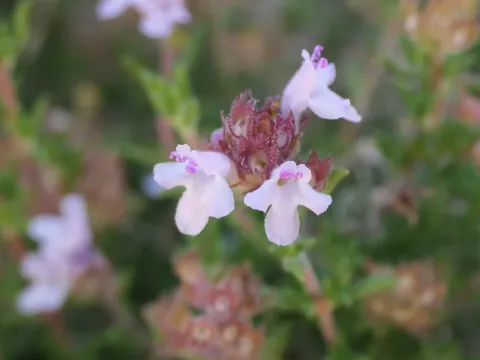
Lemon thyme
Thymus hyemalis
Lemon thyme (Thymus hyemalis) is a perennial subshrub belonging to the Lamiaceae family, highly valued for its intense lemon-scented foliage and essential oil content. The plant forms a compact, woody-based shrub with small, fragrant leaves that maintain their aromatic properties throughout the growing season.
What the section contains
Lemon thyme
Seed propagation is typically initiated indoors in early spring to establish strong seedlings before transplanting. In warmer climates, direct sowing can be done in well-prepared soil once the frost risk has passed and temperatures consistently exceed 15 degrees Celsius.
Seeds should be sown shallowly, as they require light to germinate effectively. A spacing of 30 cm between plants is recommended to promote airflow and prevent competition for resources, which is essential for uniform growth and high-quality leaf production.
In large-scale agricultural practice, vegetative propagation via cuttings is preferred to ensure clonal uniformity. This method allows growers to maintain specific chemotypes of the plant, which is crucial for the consistent essential oil profiles demanded by the industry.
Initial growth during the first season is relatively slow as the plant invests energy into root system development. Providing adequate weed control and minimal moisture stress during these early stages will lead to a more robust and productive herb crop in subsequent years.
Thymus hyemalis thrives in full sun exposure. Adequate light intensity is directly linked to the concentration of essential oils in the foliage; therefore, choosing the right site with maximum solar exposure is the most important factor in commercial cultivation.
The crop demands excellent drainage to survive and flourish. It is highly sensitive to waterlogged soils, which frequently cause root rot and crown decline. Sandy or gravelly loam soils with a neutral to slightly alkaline pH are considered ideal for this species.
While the plant is quite drought-tolerant once established, supplemental irrigation is necessary during dry spells to ensure continuous vegetative growth. Avoiding overhead irrigation is recommended to prevent excessive leaf wetness, which can encourage fungal pathogens.
In cooler temperate zones, winter protection may be required to prevent freeze damage. Mulching with inorganic materials or using agricultural fleece can help maintain soil temperature and protect the woody base of the plant during severe winter dormancy.
Soil nutrient levels should be managed carefully. Excessive nitrogen fertilization promotes rapid but "soft" growth, which decreases the plant's resistance to environmental stress and dilutes the concentration of essential oils in the harvested biomass.
Economic yield is highest on mature, established plantations between two and four years of age. A healthy crop can produce a significant amount of biomass per hectare when managed with correct cutting intervals and nutrient programs.
Yields typically range between 15 to 20 metric tons of fresh biomass per hectare depending on crop density and environmental conditions. Proper management of the harvest schedule allows for multiple cuts per year in regions with long growing seasons.
The peak harvest time coincides with the start of full bloom, a period when essential oil synthesis is at its maximum. Harvesting at this stage ensures the highest quality aromatic output and maximum shelf life for the dried product.
Regrowth capacity is a key feature of this crop, provided the harvest is performed at the correct height. Leaving the bottom 5-10 cm of the stems ensures that the plant has sufficient vegetative resources to recover and produce a secondary crop.
Post-harvest handling is critical for maintaining high yields of oil. Biomass should be kept cool and processed as quickly as possible to prevent degradation of the volatile compounds, which are the primary value drivers for the crop.
The most prevalent threats to Thymus hyemalis are root-rotting fungi like Pythium and Phytophthora, often triggered by over-irrigation or poor soil structure. These infections are difficult to control once established and necessitate proactive site drainage.
Pests such as spider mites and aphids can become significant problems during hot, dry periods. They primarily damage the foliage, reducing both the marketable weight of the crop and the aesthetic quality of the harvest.
Integrated pest management (IPM) strategies, including crop rotation and the use of beneficial insects, are highly effective in managing pest populations. Regular field scouting is essential to identify infestations before they reach economic damage thresholds.
Sanitation practices, such as the removal of debris and infected plant material, help break the life cycles of pathogens and pests. Keeping the planting rows free of weeds also improves air circulation and reduces the micro-humidity that favors fungal growth.
The use of chemical pesticides should be strictly regulated and avoided close to harvest time to ensure the safety of the end-product. Biological control agents, such as neem-based products or microbial sprays, are often preferred for this herb.
Harvesting should be performed on a dry, sunny morning after the dew has evaporated. Dry plant tissue is essential for preventing spoilage during the drying process and maintaining the volatile components that constitute the lemon fragrance.
The crop is cut at a uniform height to encourage consistent regrowth across the field. Utilizing specialized mechanical harvesters can increase efficiency, provided the equipment is calibrated to leave sufficient woody tissue intact.
Drying must occur in a temperature-controlled environment away from direct sunlight. High temperatures during the drying phase will cause the essential oils to evaporate, resulting in a product that lacks the characteristic lemon aroma of fresh thyme.
Proper airflow in the drying facility is vital to remove moisture rapidly. Excess moisture remaining in the dried foliage will lead to mold development, which can contaminate the entire batch and make it unsuitable for commercial use.
Once drying is complete, the leaves are mechanically separated from the stems and sieved to reach the desired purity. Storing the final product in airtight, light-resistant packaging is necessary to maintain the quality of the essential oils for up to two years.