
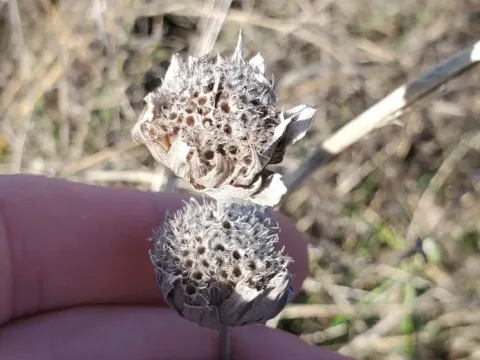
Lemon beebalm
Monarda citriodora
Lemon beebalm (Monarda citriodora) is an annual or short-lived perennial herb belonging to the Lamiaceae family. Commercially, it is propagated primarily through seeds, which are sown directly into the soil or started in trays to ensure early establishment and uniform crop density.
What the section contains
Lemon beebalm
Sowing in open ground should occur after the danger of frost has passed, typically in late spring when the soil temperature has risen significantly. Seeds are very small and should be sown shallowly or surface-sown, as they require sufficient exposure to light for successful germination and early development.
When starting seeds indoors, sowing in late winter or early spring in a light, well-draining potting medium is recommended. Maintaining an ambient temperature of 18–20 degrees Celsius encourages consistent germination. Seedlings should be hardened off before being transplanted into their permanent location.
The recommended planting pattern involves spacing rows 45 to 60 centimeters apart, with individual plants placed 20 to 30 centimeters apart within the row. This spacing ensures proper air circulation, which is vital for preventing humidity-related diseases and supporting healthy plant architecture.
Seed quality and viability are crucial for uniform production. It is recommended to use fresh seeds and ensure that the sowing depth does not exceed a few millimeters to prevent poor emergence. Proper management at this stage lays the foundation for a productive crop throughout the growing season.
Lemon beebalm is a sun-loving plant that achieves its highest biomass and oil content when cultivated in full sunlight. Insufficient exposure to sunlight leads to weak growth, reduced leaf production, and a lower concentration of essential oils, diminishing the crop's market value.
In terms of soil preference, this plant thrives in light, fertile sandy loam or loamy soils with a neutral pH. While it can adapt to various soil types, good drainage is essential, as saturated, heavy clay soils frequently lead to root rot and other physiological stressors that hinder growth.
Although it possesses some drought tolerance, consistent moisture is required during the peak growth phases to ensure high-quality foliage production. In arid climates or during dry summer months, regular irrigation is necessary to maintain the plant's health and aromatic potency.
Field preparation involves deep autumn plowing to incorporate organic matter such as compost or manure, which improves soil structure and nutrient availability. In the spring, secondary tillage is performed to create a fine, level seedbed suitable for the small seeds of the lemon beebalm.
The optimal temperature range for the vegetative growth of Monarda citriodora is between 20 and 25 degrees Celsius. While it can withstand minor temperature fluctuations, it performs best in regions with long, warm growing seasons that allow for multiple harvests or continuous biomass accumulation.
The yield of lemon beebalm depends on fertility, water management, and adherence to agronomic practices. Under favorable conditions, the crop can produce a significant amount of fresh biomass, which serves as the primary source for essential oil extraction and dried herb production.
The economic potential of this crop is tied to its essential oil yield, which peaks during the full bloom stage. Careful observation of the plant's phenological stage is necessary to ensure harvest coincides with the maximum accumulation of secondary metabolites and aromatic compounds.
Lemon beebalm is utilized across various sectors, including the food industry for flavoring teas and beverages, and in the pharmaceutical and cosmetic industries due to its antiseptic and fragrant properties. Its versatility makes it a valuable commodity for small-scale and large-scale producers.
Fertilization with a balanced nutrient program during the early growth phase promotes the development of robust leafy rosettes. This encourages the plant to allocate more energy to foliage and floral production, ultimately increasing the harvestable yield per hectare in a single growing cycle.
Efficiency in production is enhanced by the plant's ability to regenerate after being cut. By optimizing cutting height and post-harvest maintenance, growers can often secure two to three cuts per season, significantly increasing the total output and improving the financial viability of the crop.
The most significant pathological threats to lemon beebalm are fungal diseases, particularly powdery mildew. This condition often arises in stagnant, humid environments where air circulation is restricted, appearing as a white, dusty layer on the leaves and eventually reducing the plant's health.
Root rot and crown rot represent serious dangers when plants are grown in poorly drained or waterlogged soils. To mitigate these risks, growers should implement a strict crop rotation schedule and avoid planting in sites with a history of drainage issues or high water tables.
Pests such as aphids and certain types of beetles can damage the vegetative parts of the plant, including leaves and tender shoot tips. By feeding on plant sap, these insects can stunt growth and deform the foliage, negatively impacting the appearance and yield of the harvested material.
Integrated pest management (IPM) should be the priority, focusing on preventative measures such as maintaining optimal plant spacing and ensuring weed control. The use of biological control agents or soft pesticides is preferred to avoid chemical residues that could compromise the herb's quality.
Strong, vigorous plants grown under ideal conditions possess a natural resistance to many pests and diseases. Regular monitoring and timely intervention, along with a healthy ecosystem in the field, reduce the need for intensive chemical applications and support sustainable crop production.
Harvesting lemon beebalm is ideally conducted during the full flowering phase when the plant's essential oil concentration is at its maximum. It is best to harvest on a dry day, preferably in the morning after the dew has evaporated, to ensure high quality and reduce moisture issues.
The crop should be cut at a height of 10 to 15 centimeters above the soil surface. This height is sufficient to leave enough leaf tissue for the plant to regenerate and sprout new shoots, enabling subsequent harvests later in the same growing season if climate conditions allow.
Immediate post-harvest processing is critical for preserving aromatic compounds. The harvested biomass should be dried in a shaded, well-ventilated area away from direct sunlight, which can rapidly degrade the delicate essential oils and cause the foliage to lose its characteristic lemon scent.
For industrial drying, temperatures should be carefully regulated, not exceeding 40 degrees Celsius. Exceeding this temperature can lead to the loss of volatile compounds, resulting in a product that is less fragrant and less effective for its intended culinary or medicinal applications.
Final storage requires airtight, moisture-proof, and light-protected containers to maintain the quality of the dried herb for an extended period. Proper storage ensures that the flavor and therapeutic properties remain intact from the point of harvest until the product reaches the consumer.