

Reference · Crops
Mint
Mentha L.
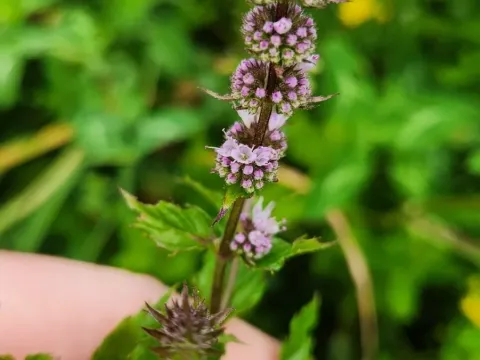
Mint (Mentha L.) is a widespread perennial herb belonging to the Lamiaceae family. It is a vital industrial crop known primarily for its high concentration of essential oils, particularly menthol, which is widely used in food, pharmaceutical, and cosmetic industries.
18
items
What the section contains
 Peppermint
Mentha x piperita L.
16 products
Peppermint
Mentha x piperita L.
16 products
 Apple mint
Mentha x rotundifolia (L.) Huds.
Apple mint
Mentha x rotundifolia (L.) Huds.
 Australian mint
Mentha australis R. Br.
Australian mint
Mentha australis R. Br.
 Field mint
Mentha arvensis L.
Field mint
Mentha arvensis L.
 Gattefosse Mint
Mentha gattefossei Maire
Gattefosse Mint
Mentha gattefossei Maire
 Hart's pennyroyal
Mentha cervina L.
Hart's pennyroyal
Mentha cervina L.
 Japanese mint
Mentha japonica (Miq.) Makino
Japanese mint
Mentha japonica (Miq.) Makino
 Large-flowered mint
Mentha grandiflora Benth.
Large-flowered mint
Mentha grandiflora Benth.
 Lemon mint
Mentha aquatica L. var. citrata (Ehrh.) Fresen.
Lemon mint
Mentha aquatica L. var. citrata (Ehrh.) Fresen.
 Long-leaved Asian mint
Mentha longifolia (L.) Huds. var. asiatica (Boriss.) Rech. f.
Long-leaved Asian mint
Mentha longifolia (L.) Huds. var. asiatica (Boriss.) Rech. f.
 Loose-flower mint
Mentha laxiflora Benth.
Loose-flower mint
Mentha laxiflora Benth.
 Mentha diemenica
 Spreng.
Mentha longifolia
Mentha longifolia (L.) Huds.
Mentha diemenica
Mentha diemenica Spreng.
Mentha longifolia
Mentha longifolia (L.) Huds.
 Pennyroyal
Mentha pulegium L.
Pennyroyal
Mentha pulegium L.
 Spearmint
Mentha spicata L.
Water mint
Mentha aquatica L.
Spearmint
Mentha spicata L.
Water mint
Mentha aquatica L.
 Whorled mint
Mentha x verticillata L.
Whorled mint
Mentha x verticillata L.
 Wild mint
Mentha canadensis L.
Wild mint
Mentha canadensis L.
Marketplace
Products in this section · 12


Mint
Propagation is predominantly vegetative, utilizing rhizome cuttings. The optimal planting time is early spring, once the soil has warmed sufficiently, or late summer to ensure root establishment before the onset of winter dormancy.
Proper soil preparation is crucial. The land must be deeply tilled and enriched with organic matter before planting. Rhizomes are typically placed in trenches at a depth of 8–12 cm, with row spacing maintained at 60–70 cm to facilitate mechanical maintenance.
Because mint is a vigorous grower, planting density must be managed effectively to prevent overcrowding, which can lead to poor air circulation and increased susceptibility to fungal diseases within the field.
While seed propagation is biologically possible, it is rarely used in commercial agriculture. Vegetative reproduction is preferred because it ensures the preservation of specific hybrid traits and oil profiles of the selected mint varieties.
Mint is highly sensitive to soil moisture levels. It thrives in well-watered conditions and requires consistent irrigation, particularly during dry spells in the summer, though it cannot tolerate waterlogged, stagnant soil conditions.
The ideal soil type for mint is a light, fertile, and well-drained loam or sandy loam. Heavy clay soils that restrict root growth and aeration should be avoided to prevent root rot and ensure optimal essential oil synthesis.
As a sun-loving plant, mint requires full sun to partial shade. Exposure to adequate sunlight is essential for the metabolic process that produces essential oils; excessive shade will result in spindly growth and low-quality oil yield.
A soil pH between 6.0 and 7.0 is considered ideal for commercial production. Maintaining this balance is vital for the availability of essential nutrients, as overly acidic or alkaline conditions will inhibit plant vigor and overall yield.
The crop prefers a temperate climate with mild temperatures during the growing season. While hardy, the plant requires protection from extreme cold in regions with little snow cover to prevent damage to the rhizome buds.
Yield potential in mint is largely dependent on the quality of the planting material, irrigation management, and fertilization schedule. Nitrogen-based fertilizers are particularly effective in promoting lush vegetative growth.
Commercial plantations are most productive during their second and third years of life. After this period, yield and quality typically decline, necessitating the renovation of the plantation to maintain profitability.
In intensive farming, average green matter yields range from 15 to 25 tons per hectare per harvest. However, the true success of a mint crop is measured by the percentage of essential oil content in the dried leaves.
Advanced irrigation techniques, such as drip systems, are standard in modern operations to ensure constant moisture without encouraging fungal growth, leading to higher and more consistent yields.
Harvest frequency is highly dependent on the climate; in many temperate regions, two or even three cuts per season are possible, provided the plant is managed carefully to allow for regeneration between harvests.
Mint rust is the most destructive disease affecting this crop. It is caused by fungal pathogens that appear as orange or brown pustules on leaves, significantly reducing the biomass and oil quality of the affected plants.
Powdery mildew represents another common threat, especially in humid conditions with poor ventilation. It manifests as a white, powdery coating that impedes photosynthesis and weakens the plant's overall vitality.
Insect pests, including mint beetles and aphids, can cause substantial damage. Beetles consume leaf tissue, while aphids pierce leaves to suck sap, both of which stress the plant and make it vulnerable to secondary infections.
Integrated Pest Management (IPM) is crucial in mint cultivation. Because the crop is used for human consumption, chemical pesticide usage is strictly regulated, favoring biological controls and rigorous crop rotation.
Crop rotation is the most effective preventative measure. Keeping fields clear of mint for at least four years between planting cycles breaks the life cycle of soil-borne pathogens and minimizes the buildup of pest populations.
The harvest timing is dictated by the flowering stage. For the highest yield and best quality of essential oil, harvesting must occur when the mint is in full bloom, as this is when oil concentration peaks.
Specialized harvesting machinery is used to cut the plants at a specific height. This clean-cut technique is designed to leave the root system intact, ensuring the plant can quickly regenerate for the next harvest cycle.
Once harvested, the mint must be processed or moved to drying facilities immediately. Exposure to direct sunlight or delays in transport results in the loss of volatile essential oil compounds, drastically lowering product value.
Controlled drying at temperatures not exceeding 40°C is required to remove moisture without damaging the oil profile. Proper drying prevents mold and ensures long-term stability of the dried product.
Storage requires cool, dark, and airtight conditions. Proper packaging is essential to prevent the oxidation and evaporation of aromatic oils, ensuring the quality remains high until the product reaches the end consumer.