
Mentha longifolia
Mentha longifolia (L.) Huds.
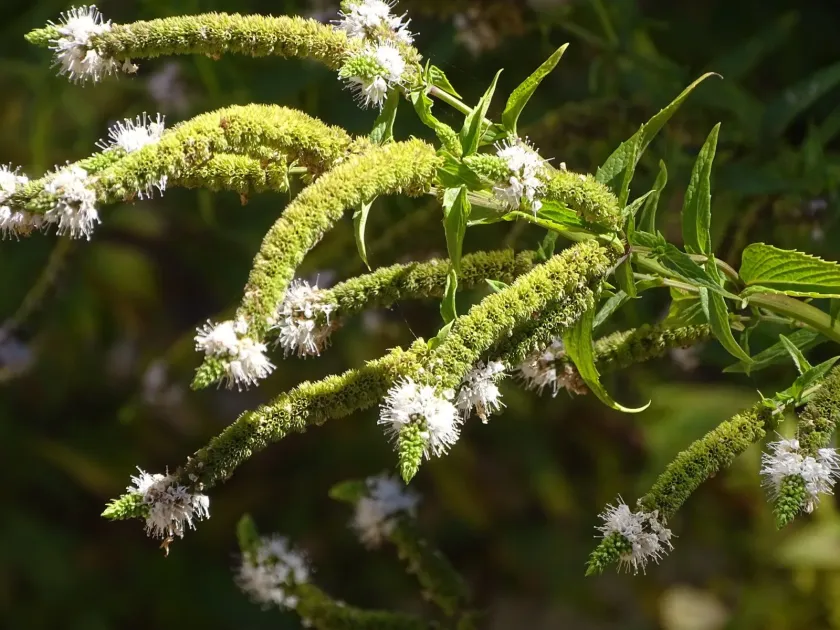
Description
Sowing dates
Mentha longifolia, a member of the Lamiaceae family, is typically propagated vegetatively using rhizome cuttings, which ensures uniform plant development.
The optimal planting time is early spring or autumn, provided that soil moisture is sufficient to support the rooting process of the rhizome sections.
When establishing a plantation, a row spacing of 60–70 cm is recommended to facilitate mechanical weeding and effective management of the field.
If seeds are used, they should be sown shallowly as they require light to germinate effectively, usually in a seedbed or well-prepared soil surface.
The plantation remains productive for 5 to 7 years, after which the rhizomes tend to become too crowded, necessitating the renovation of the field.
Growing requirements
This species thrives in sunny, open environments but can tolerate partial shade, provided there is enough moisture to maintain vigorous vegetative growth.
It prefers fertile, loamy soils with high organic matter content and a neutral or slightly acidic pH, ensuring optimal nutrient availability for the plant.
Due to its natural habitat near water bodies, Mentha longifolia has high water requirements and benefits significantly from regular irrigation during dry spells.
While the plant is hardy and can withstand freezing winter temperatures, it requires a well-drained soil structure to prevent root rot during dormant months.
Proper aeration is essential for the root system, so heavy, clay-rich soils should be amended with organic materials to improve soil structure before planting.
Yield
Yields of fresh herb mass vary based on climate and soil fertility, but the crop generally shows high productivity under consistent irrigation regimes.
In optimal commercial conditions, growers can expect multiple cuts per season, resulting in significant annual biomass production for extraction or drying.
The concentration of essential oils is a key quality metric, influenced by the amount of direct sunlight received during the weeks preceding the harvest.
Balanced fertilizer application, particularly nitrogen and phosphorus, is crucial for maximizing leaf biomass and supporting the expansion of the rhizome network.
Maintaining a weed-free environment is vital, as competition for nutrients and water significantly reduces the total harvested output per hectare.
Main diseases and pests
Rust, caused by fungal pathogens, is a major concern that manifests as brown pustules on the leaves, potentially causing severe defoliation of the crop.
Powdery mildew often attacks the plants in late summer, especially in humid conditions with poor air circulation, reducing both the quality and volume of the yield.
Pests such as mint beetles and various aphid species are known to feed on the foliage, necessitating vigilant scouting and appropriate management strategies.
Root-knot nematodes can also be an issue in certain soil types, leading to stunted plant growth and reduced resistance to environmental stressors.
Integrated pest management, including crop rotation and the removal of infected debris, is the best strategy to maintain a healthy and productive plantation.
Harvesting
Harvesting is ideally conducted during the full flowering stage, as this is when the essential oil content in the leaves and stems is at its peak concentration.
The plants are cut several centimeters above the ground, which allows for rapid regrowth and improves the chances of obtaining a successful second harvest.
Immediate handling of the freshly cut material is essential to prevent heat buildup and preserve the delicate volatile compounds within the aromatic leaves.
Controlled drying at temperatures not exceeding 40 degrees Celsius preserves the vibrant green color and medicinal properties of the final product.
Once dried, the crop is processed to separate the leaves and flowers from the woody stems, followed by careful storage in airtight, cool conditions.