
Wild mint
Mentha canadensis L.
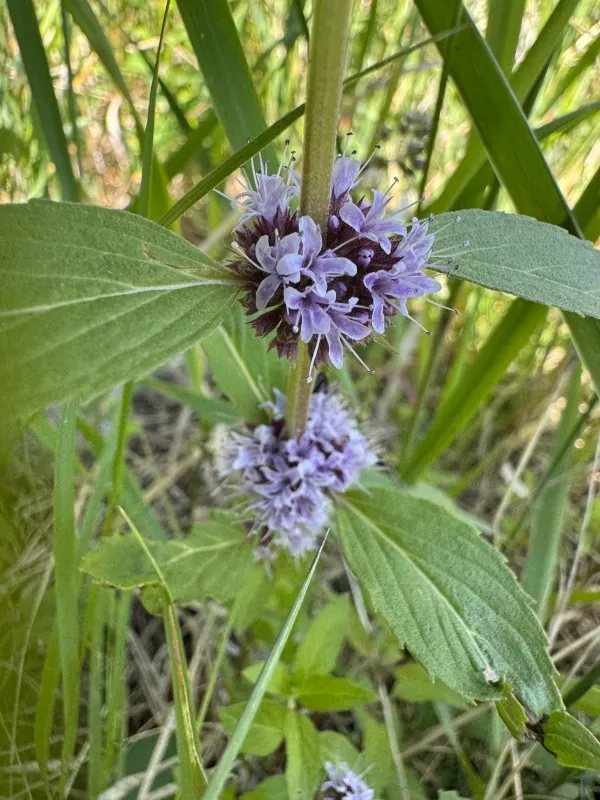
Description
Sowing dates
Wild mint (Mentha canadensis L.) is a perennial herbaceous plant belonging to the Lamiaceae family. In agricultural practice, it is primarily propagated vegetatively using rhizome cuttings, which are planted early in the spring when soil temperatures reach 5-8 degrees Celsius.
Planting is typically performed in rows, with spacing between 45 and 60 centimeters. This layout facilitates mechanized cultivation, weeding, and maintenance, ensuring the plants have adequate room for foliage development.
While seed propagation is possible, it is rarely used commercially due to the high genetic variability of the offspring. Breeders may use seeds in greenhouse environments, transplanting the seedlings into the field only after the risk of frost has completely passed.
The depth of planting is a crucial factor for success. Rhizomes should be buried at a depth of 8-10 centimeters; this protects them from winter desiccation and encourages strong early spring sprouting.
Optimal field density ranges from 40,000 to 50,000 plants per hectare. Achieving a dense canopy is essential for suppressing weed competition and maximizing the yield of the aerial biomass per unit area.
Growing requirements
Wild mint thrives in fertile, well-aerated loam or sandy loam soils with a neutral or slightly acidic pH. The crop has a high water requirement; thus, it is most productive in river valleys or fields equipped with efficient irrigation systems.
Light availability is vital for the accumulation of essential oils. Although the plant can tolerate partial shade, maximum yield and oil quality are achieved in full-sun conditions throughout the growing season.
The plant grows best in temperatures ranging from 18 to 25 degrees Celsius. It is highly winter-hardy and can survive freezing conditions well if the root system is protected by a sufficient layer of soil or snow cover.
Fertilization with organic matter, such as well-rotted manure, is beneficial. During the active growth phase, nitrogen applications may be necessary, though excessive rates should be avoided to ensure the balanced development of the chemical compounds.
Crop rotation is fundamental to successful mint farming. Planting mint after cereals or row crops helps maintain soil health and minimizes the buildup of specific soil-borne pathogens.
Yield
The yield of green biomass for wild mint ranges from 15 to 25 tons per hectare, depending heavily on the intensity of the agricultural management and local climatic conditions. Peak productivity is generally observed between the second and third years of plantation life.
The essential oil yield is a critical quality indicator. Proper management during the peak flowering stage can result in outputs ranging from 30 to 60 kilograms of oil per hectare, depending on the specific cultivar used.
A typical plantation remains commercially viable for 4 to 5 years. Beyond this period, soil exhaustion and the encroachment of weeds lead to a significant decline in raw material quality, necessitating the establishment of new fields.
The use of improved cultivars is recommended to maximize the content of menthol and other active components, which increases the overall profitability of the crop in the global market.
Harvesting efficiency and post-harvest handling are essential for yield preservation. Rapid processing after cutting is required to ensure that the volatile oils are not lost during transport or initial drying.
Main diseases and pests
Mint rust, caused by the fungus Puccinia menthae, is the most significant disease affecting wild mint. It presents as small orange or brown pustules on the underside of leaves, causing premature defoliation and severe yield loss.
Powdery mildew can also affect plantations, especially in environments with high humidity and stagnant air. The characteristic white fungal mycelium reduces the photosynthetic capacity of the plant.
The mint leaf beetle is a major insect pest. Both adults and larvae feed on the foliage, significantly reducing the vigor of the plant and affecting the total amount of essential oils produced.
Aphids can infest the tender tips of mint plants, causing stunted growth and potentially spreading viral diseases. Integrated pest management, focusing on early detection and biological controls, is preferred over broad-spectrum insecticides.
To mitigate these threats, producers should strictly adhere to sanitation practices, such as removing crop residues and practicing deep plowing after the final harvest of the season to interrupt the pest life cycle.
Harvesting
Harvesting should ideally occur at the onset of mass flowering, the stage at which the accumulation of aromatic compounds reaches its peak. In regions with long growing seasons, farmers may obtain two full cuts per year.
Mowing should be carried out at a height of 5-8 centimeters above the ground. Cutting too low can cause irreparable damage to the dormant buds on the rhizomes, which are essential for regrowth in the following cycle.
Immediate transportation of the harvested biomass to the distillation unit or drying facility is crucial. Any delay can lead to the heating of the cut plant material, which results in significant losses of the volatile essential oils.
For medicinal purposes, the harvest is dried in shade or in controlled industrial drying facilities at temperatures not exceeding 40 degrees Celsius to prevent the oxidation of active ingredients.
Post-harvest care involves harrowing the field and applying necessary nutrients to prepare the root system for the next growth stage, ensuring the longevity and productivity of the plantation.