
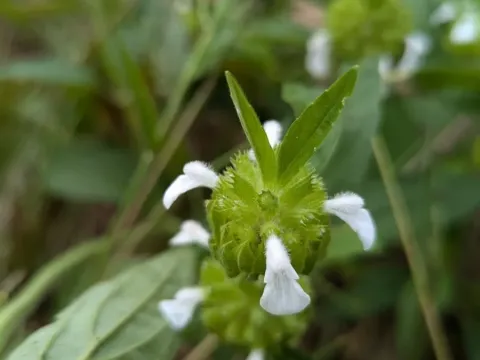
Leucas cephalotes
Leucas cephalotes
Leucas cephalotes is an annual herbaceous plant belonging to the Lamiaceae family, widely recognized for its medicinal properties in traditional systems.
What the section contains
Leucas cephalotes
The sowing process requires well-prepared, loose soil. Seeds are typically sown during the transition to the warm season, ensuring temperatures stay consistently above 20 degrees Celsius.
Row spacing should be maintained at 30 to 45 centimeters to ensure adequate airflow, which is critical to prevent moisture-related diseases in the crop.
Seeds have a small size and should be planted at a shallow depth of no more than 1 centimeter to ensure quick emergence without exhausting the energy reserves of the seedling.
Adequate soil moisture must be maintained immediately after planting to facilitate germination, which usually occurs within 7 to 10 days under favorable conditions.
This crop thrives in well-drained, sandy loam soils that prevent waterlogging, as the root system is highly sensitive to excessive soil humidity.
Full sun exposure is necessary for optimal development, as the plant requires intense light to synthesize its valuable secondary metabolites and essential oils.
The plant is relatively drought-tolerant once established, but providing supplemental irrigation during dry spells significantly boosts the overall biomass production.
A soil pH ranging from 6.0 to 7.5 is ideal. The plant responds well to moderate applications of organic compost before sowing, which improves soil structure and nutrient availability.
Avoid planting in areas with poor ventilation, as high humidity and still air can lead to the rapid onset of fungal infections in dense plant populations.
The yield of Leucas cephalotes depends largely on the planting density and the timing of the harvest relative to the flowering cycle of the plant.
Under optimal management, growers can achieve significant amounts of harvestable aerial biomass, which is the primary economic component of this crop.
Regular weeding and timely irrigation are the two most critical factors that differentiate high-yielding crops from those with stunted growth.
The concentration of beneficial compounds is highest during the early to peak flowering stage, making this the most profitable window for harvesting.
Implementing precision farming practices, such as soil testing and targeted nutrient management, can further stabilize and increase seasonal production volumes.
Root rot caused by excessive soil moisture is the most common threat, often leading to rapid plant decay if the drainage system is not effective.
Pests such as aphids and spider mites can infest the foliage, particularly during hot and dry weather, causing leaf yellowing and reduced photosynthesis.
Fungal leaf spot diseases may appear if there is poor air circulation, necessitating the removal and destruction of affected plant parts to stop the spread.
Integrated pest management strategies are recommended, focusing on biological controls and physical removal rather than heavy reliance on chemical pesticides.
Maintaining clear field boundaries and removing reservoir weeds helps keep the crop protected from common pests and soil-borne diseases typical of the area.
Harvesting is typically performed during the flowering phase when the plant contains the highest concentration of medicinal compounds in its leaves and flowers.
The plants are cut close to the ground, usually leaving 5-8 centimeters of the base to allow for potential regrowth or simply to facilitate clean collection.
Post-harvest handling is critical; the harvested material should be spread in thin layers in a shaded, ventilated area to allow for natural air drying.
Direct exposure to sunlight during the drying process should be avoided to preserve the color and the essential oil content of the herb, which adds to its market value.
Once completely dried, the product should be stored in airtight, opaque containers in a cool, dry place to maintain shelf life and prevent moisture reabsorption.