
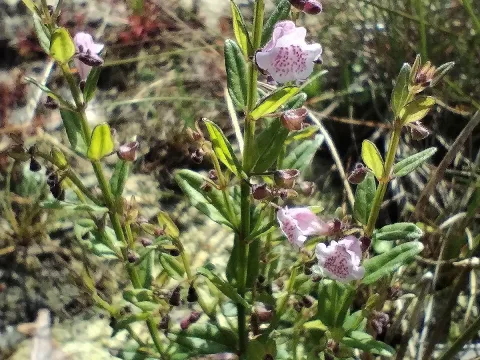
Lesser skullcap
Scutellaria minor
Lesser skullcap (Scutellaria minor) is a perennial plant belonging to the Lamiaceae family. It is increasingly recognized in herbal farming due to its pharmacological value and adaptability to various garden conditions.
What the section contains
Lesser skullcap
Sowing should be carried out in early spring. If starting seeds indoors, use trays with a sterile, well-draining substrate. Seeds require light to germinate, so they should be only lightly pressed into the soil surface rather than buried deep.
For direct outdoor sowing, ensure the soil temperature has stabilized around 12–15 degrees Celsius. Maintain consistent moisture levels to promote even germination, which typically occurs within three weeks.
The recommended planting density is approximately 25-30 cm apart. This spacing allows for proper air circulation, which is crucial for preventing humidity-related issues in the dense foliage of the skullcap.
Vegetative propagation is also a common method for commercial cultivation. Dividing mature clumps in the spring or autumn ensures faster establishment and maintains the uniformity of the plant stock.
Scutellaria minor thrives in partial shade or sunny spots protected from harsh winds. It prefers slightly acidic to neutral soils that are rich in organic matter but maintain excellent drainage properties.
Watering must be frequent but careful. The plant does not tolerate waterlogging, as its roots are susceptible to decay. During dry summer periods, supplementary irrigation is necessary to maintain optimal biomass production.
The soil should be amended with compost before planting to provide sufficient nutrients. Avoid high-nitrogen fertilizers, as they may lead to excessive leafy growth that can reduce the overall concentration of active medicinal compounds.
Temperature management is straightforward, as the plant is relatively hardy. However, in regions prone to hard frosts, applying a layer of organic mulch around the base of the plant protects the roots during winter dormancy.
Weed management is essential during the early stages of growth. Regular manual weeding or shallow cultivation between rows helps preserve soil moisture and ensures the plants have adequate resources.
Root rot is the most significant threat to Scutellaria minor, usually caused by overwatering or poor soil drainage. Ensuring that the site is well-drained is the primary defense against this disease.
Pests such as aphids and spider mites can occasionally affect the plant. Integrated pest management, focusing on biological controls or horticultural soaps, is recommended to protect the quality of the harvested herb.
Powdery mildew may appear on leaves if the plants are crowded or if airflow is restricted. Proper spacing and thinning out dense foliage are effective ways to mitigate the risk of fungal infections.
Crop rotation is a vital practice to prevent the accumulation of soil-borne pathogens. A gap of three to four years before replanting on the same site is advisable for sustainable production.
Slugs and snails can be problematic in damp seasons, particularly for young plants. Implementing physical barriers such as copper tape or using safe baits can prevent significant damage.
The harvest period for lesser skullcap coincides with its full flowering stage. This timing is critical to ensure the maximum yield of potent secondary metabolites present in the aerial parts.
Harvesting is performed by cutting the stems roughly 5-10 cm above the ground. This method allows the rootstock to remain intact, facilitating regeneration and allowing for potential second harvests in a single season.
Post-harvest drying must be done in a shaded, ventilated area. Temperatures should not exceed 40 degrees Celsius to preserve the volatile oils and active ingredients that give the plant its therapeutic qualities.
Once dried, the herb should be stored in cool, dark containers to maintain its shelf life. Quality control during sorting is necessary to remove any discolored or damaged plant material.
Beyond its traditional use in phytotherapy, Scutellaria minor is prized in landscaping for its attractive flowers and as an excellent groundcover plant that helps suppress weed growth.