
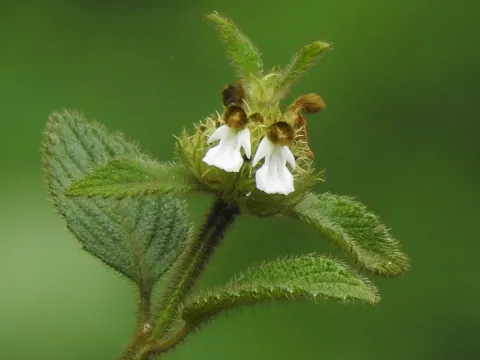
Leucas ciliata
Leucas ciliata
Leucas ciliata is an aromatic herb belonging to the Lamiaceae family. Native to the tropical and subtropical regions of Asia, it has gained attention for its medicinal properties and the presence of valuable essential oils within its tissues.
What the section contains
Leucas ciliata
The plant thrives in warm climates with high humidity levels and well-drained soils. Ideal soil conditions include a rich loam texture with a slightly acidic to neutral pH, ensuring the roots have access to both air and moisture.
Botanically, it is characterized by its upright stem structure and leaves covered with distinctive cilia, which serve to protect the plant and reduce water loss. The inflorescences are typical for the family, appearing as dense whorls of small flowers.
Economically, the species is cultivated for medicinal extraction. The chemical profile of the plant includes various bioactive compounds used in traditional and modern herbal practices for their anti-inflammatory and antiseptic effects.
Successful cultivation requires careful management of sunlight exposure. While the plant loves heat, young seedlings benefit from partial shade during the most intense afternoon hours to ensure steady growth and leaf quality.
Root rot caused by waterlogging is the primary threat to Leucas ciliata. Poor drainage creates an environment where soil-borne pathogens flourish, quickly decaying the root structure of the crop.
Insect pests, such as aphids and spider mites, are common nuisances in commercial production. They target the foliage, causing chlorosis and reducing the plant's overall vigor and the purity of the final oil extract.
To mitigate these risks, farmers should prioritize site selection with excellent drainage and ensure optimal spacing between plants. Proper ventilation is key to preventing the buildup of fungal spores in the canopy.
Integrated Pest Management (IPM) practices are highly recommended. This includes the use of organic deterrents and the introduction of beneficial insects to control pest populations without relying on heavy synthetic pesticides.
Regular field scouting is essential to identify early signs of stress or infestation. By maintaining a clean cultivation environment and timely intervention, growers can ensure a robust and high-quality harvest throughout the season.