
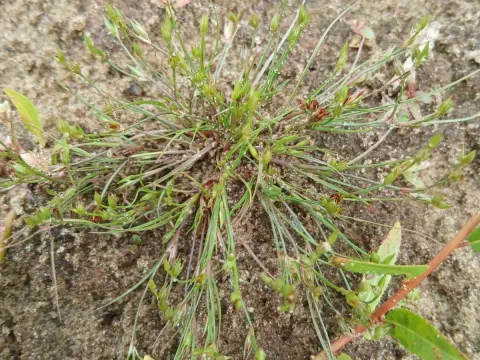
Toad rush
Juncus ranarius
Toad rush (Juncus ranarius) is an annual herb belonging to the Juncaceae family. It is typically found in moist, sandy, or muddy habitats, often thriving in areas where soil salinity prevents the growth of other common agricultural species.
What the section contains
Toad rush
The origin of this species is linked to temperate regions across the Northern Hemisphere. It serves as a specialized plant in ecosystems characterized by fluctuating water levels and saline conditions, which defines its unique agricultural niche.
The plant demonstrates distinct botanical features including slender, grass-like leaves and small, inconspicuous flowers clustered at the tips. Its root system is relatively shallow but highly efficient at absorbing moisture in saturated soil environments.
Cultivation requirements necessitate high soil moisture levels and significant light exposure. Toad rush does not perform well in shaded areas, as its metabolic processes are optimized for high-intensity sunlight combined with constant water availability.
Regarding soil, it shows a preference for loamy or sandy substrates with good drainage but consistently high water holding capacity. It is noted for its high tolerance to saline conditions compared to traditional cereal crops.
The primary threat to the stability of toad rush populations is drought. Since the plant lacks deep-reaching roots, prolonged water deficits lead to rapid desiccation and a significant decline in overall biomass production.
Pests that commonly affect toad rush include various coleopterans that feed on leaf tissue and seeds. These infestations are most problematic during warm, dry spells when the plant is already under physiological stress.
Fungal diseases, including rusts, are common in environments with poor air circulation. These pathogens thrive in high-humidity microclimates and can significantly reduce the nutritional value of the foliage for forage purposes.
Competition from aggressive, tall-growing weed species represents another significant threat to crop establishment. Proper site preparation and early-stage monitoring are essential for successful maintenance of the crop.
Management strategies focus on maintaining optimal hydrological conditions and minimizing plant stress. Chemical control measures are rarely deployed due to the sensitivity of the habitats where the species typically grows.