
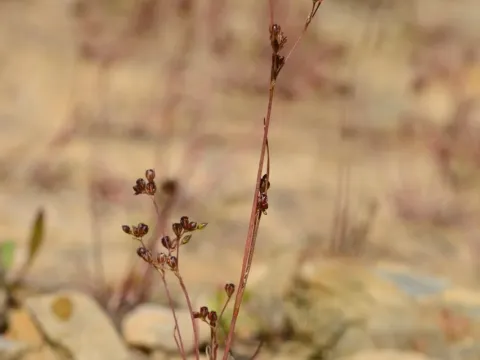
Toad rush (Juncus tenageia)
Juncus tenageia
Toad rush (Juncus tenageia) is an annual herbaceous plant belonging to the Juncaceae family. It is naturally distributed across Europe and the Mediterranean, where it typically inhabits wetlands, muddy shores, and fields that experience periodic flooding or high moisture content throughout the year.
What the section contains
Toad rush (Juncus tenageia)
Botanically, the plant is characterized by its slender, erect stems reaching 5–30 cm in height. The foliage is narrow and grass-like, while the inflorescence is a distinct panicle containing small flowers that provide sustenance to local pollinating insects when in bloom.
The cultural requirements are strictly linked to hydrology. Toad rush thrives on heavy, silty, or sandy-loam soils that retain water well. It is considered an indicator of specific hydrological conditions and requires a high water table to ensure successful germination and development.
In agricultural practice, climate management is crucial; the plant prefers open, sunny locations with stable humidity. It is relatively cold-hardy but sensitive to prolonged droughts, which can terminate the vegetative cycle prematurely.
The economic value of this species lies in its utility for wetland restoration and bio-drainage programs. It is used in agricultural engineering to stabilize muddy soils and prevent water-induced erosion in low-lying land areas.
Major threats to Juncus tenageia include fungal pathogens such as rusts and various leaf spots. These diseases typically emerge in dense stands where air circulation is restricted and moisture levels remain high for extended periods.
Insect pests include various species of stem-borers and weevils that can damage the vegetative tissue. While the plant is robust, significant infestations during the early growth stages can negatively impact the final biomass yield.
Invasive weed competition represents a significant agronomic challenge. Fast-growing competitive species can crowd out toad rush, necessitating careful field preparation and potential manual weeding in the early stages of establishment.
Hydrological instability, specifically extreme desiccation, is the most detrimental factor. If the soil substrate dries out completely before the plant finishes its seed production phase, the entire crop may fail to establish a seed bank for the following year.
For professional cultivation, integrated pest management (IPM) practices are recommended. Monitoring soil pH and nutrient balance, alongside preventing excessive crowding, helps maintain the health and vigor of Juncus tenageia populations.