
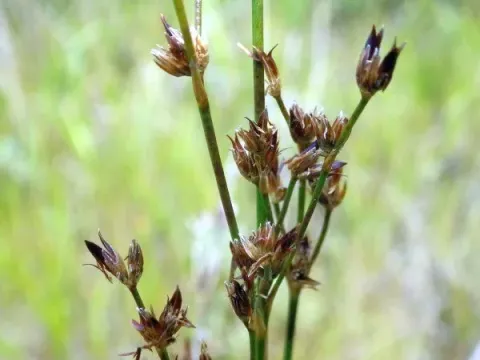
Kramers rush
Juncus krameri
Kramers rush (Juncus krameri) is a perennial herbaceous plant belonging to the Juncaceae family. This species is typically found in wetlands and marshy environments, where it plays a key role in the local ecosystem.
What the section contains
Kramers rush
Botanically, it features cylindrical stems that grow in dense clumps. The root system is fibrous and robust, allowing the plant to stabilize wet soils effectively and compete successfully against other wetland vegetation.
Regarding soil requirements, Kramers rush thrives in nutrient-rich, moist, or waterlogged substrates. It has a high tolerance for varying pH levels and can grow in soils that are too heavy for many other crops.
The climate requirements for this plant are quite flexible, as it is adapted to temperate conditions. It requires consistent moisture throughout the growing season and benefits from full sun to partial shade exposure.
The main commercial and ecological uses include ornamental landscape design, specifically for water gardens and shoreline restoration projects, as well as in phytoremediation for water quality improvement.
Kramers rush is generally resistant to many agricultural pests and pathogens; however, excessive humidity without airflow can occasionally lead to fungal issues.
Potential threats include aphids, which may cluster on the green stems during warmer months, and certain species of snails or slugs that favor tender young growth.
Root rot is the most significant physiological threat, primarily caused by stagnant, anaerobic water conditions that prevent the roots from obtaining necessary oxygen.
To prevent disease outbreaks, it is advised to manage the plant density and ensure that the water in the surrounding environment is not entirely stagnant.
Integrated pest management strategies are rarely required for this plant, as it demonstrates strong natural vitality when grown in appropriate, favorable wetland conditions.