
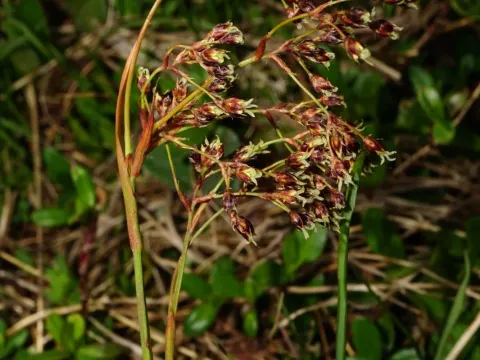
Luzula glabrata
Luzula glabrata
Luzula glabrata, commonly known as a type of woodrush, belongs to the Juncaceae family. This perennial plant is characterized by its rhizomatous growth habit, which allows it to form stable colonies in its natural shaded woodland habitat.
What the section contains
Luzula glabrata
The culture requires rich, moist, and well-drained soils to thrive. It performs best in partial to full shade, making it an excellent choice for areas under canopy trees where most other ground-covering crops struggle to grow.
It displays remarkable hardiness, being capable of surviving cold winter conditions across various geographical zones. The plant prefers slightly acidic soil conditions, which aligns with its natural evolutionary adaptations to forest floors.
Agricultural management is relatively simple, requiring minimal intervention. The main objective is to maintain a consistent moisture level in the substrate while ensuring that drainage is sufficient to prevent root rot or suffocating conditions.
The primary use of Luzula glabrata is as a ground cover in landscaping and sustainable garden design. Its ability to create dense, weed-suppressing mats reduces the need for manual weeding and chemical intervention, proving its value as a functional ornamental crop.
Luzula glabrata is naturally robust, but it can be susceptible to fungal diseases when grown in suboptimal environments. Excess soil moisture and poor air circulation are the primary drivers of root decay and crown rot issues.
Powdery mildew may occur if the planting density is too high or if the plants are situated in areas with inadequate ventilation. Proper spacing and airflow are critical for maintaining healthy, disease-free foliage.
Slugs and snails are the most common pests, particularly during damp seasons. They can cause aesthetic damage to the leaves, which is of concern mainly in high-value ornamental or landscaping settings.
Integrated pest management, including cleaning away debris that serves as shelter for mollusks and improving site drainage, is usually sufficient to keep pest populations at manageable levels.
Overall, the plant demonstrates high resistance to significant crop-destroying pathogens, making it a reliable and low-maintenance candidate for ecological restoration and forest-based agricultural projects.