
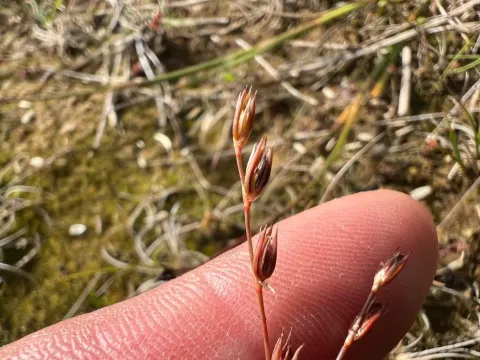
Leafy rush
Juncus foliosus
The leafy rush (Juncus foliosus) is a perennial herbaceous plant belonging to the Juncaceae family. Unlike many other species within the Juncus genus, this particular species is distinguished by its well-developed, leaf-bearing stems, contributing to its significant biomass production potential.
What the section contains
Leafy rush
This species is native to humid environments and typically colonizes wet, marshy areas. It is commonly found along the banks of water bodies, in floodplain meadows, and in areas where the water table remains close to the surface throughout the majority of the growing season.
For successful cultivation, the plant requires nutrient-rich soils with an organic base and a neutral to slightly acidic pH. While it shows remarkable tolerance to periodic flooding, the plant is highly sensitive to prolonged drought conditions, which can negatively affect its vegetative development.
The leafy rush thrives in temperate climatic zones where moisture availability is constant. It requires open, sunlit areas to achieve its full growth potential and is often considered a reliable species for ecological management and site stabilization projects in wetland areas.
Agricultural management of Juncus foliosus centers on maintaining appropriate soil moisture levels and managing competing flora. Given its environmental plasticity, it serves as an excellent candidate for the phytoremediation of contaminated wetlands and soil erosion control programs.
The industrial and agricultural utility of Juncus foliosus is increasingly recognized in the context of sustainable land use. The harvested biomass is primarily used for ecological restoration projects, the production of natural weaving fibers, and as an agent for natural water purification in constructed wetlands.