
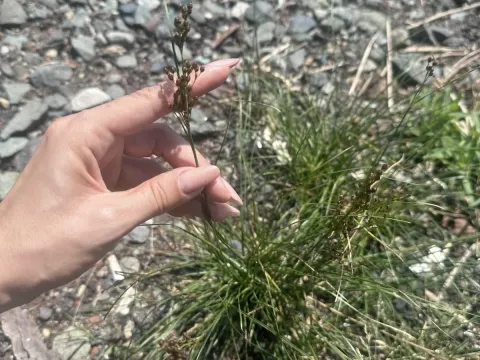
Juncus gracillimus
Juncus gracillimus
Juncus gracillimus is a perennial herbaceous plant belonging to the Juncaceae family. This species is native to humid environments and is highly adapted to growing in aquatic or semi-aquatic zones, making it a specialized crop for wet landscapes and specific agricultural settings.
What the section contains
Juncus gracillimus
Botanically, the plant is characterized by slender, erect stems that grow in dense tufts. Its foliage is reduced, which helps minimize water loss and allows the plant to thrive in damp conditions where other vegetation might struggle to establish itself.
The climate requirements for this species are centered around stable moisture levels. It prefers regions where humidity remains consistently high, as it does not tolerate severe drought conditions. Moderate temperatures are ideal for its development throughout the growing season.
Regarding soil preferences, Juncus gracillimus thrives in rich, organic, and moisture-retentive soils. It can adapt to slightly acidic or neutral conditions, provided the ground remains saturated or at least consistently damp, which is critical for its long-term survival.
In terms of agricultural and landscape utility, this plant is primarily valued for its role in water edge stabilization and phytoremediation. By absorbing excess nutrients from water, it serves as a natural filtration system while providing an attractive aesthetic component for pond margins.
Juncus gracillimus is generally hardy, but it can be susceptible to fungal pathogens like rust or leaf spot diseases if grown in conditions where air circulation is restricted. Excessive humidity combined with lack of airflow can trigger rapid infection outbreaks.
Common pests include aphids, which may cluster on the tender tips of the stems during the warmer months of the year. While these infestations are rarely fatal, they can significantly weaken the plant and reduce its decorative or functional value.
Disease management involves ensuring adequate spacing during planting to facilitate airflow and regular sanitation by removing dead or decaying stems. These practices drastically reduce the environment conducive to fungal development.
For pest control, integrated pest management strategies are recommended. This includes encouraging natural predators or applying approved horticultural soaps and insecticides only when necessary to manage population explosions of pests like aphids.
Proper nutrient management is essential for plant health; over-fertilization with nitrogenous compounds should be avoided, as it encourages soft, rapid growth that is inherently more susceptible to pest damage and environmental stress.